

Quantum Computing: Can Europe Lead the Tech Race?

Quantum computing has emerged as a pivotal frontier in technology, with implications that could revolutionize numerous industries from healthcare to cryptography. As Europe positions itself to be a contender in this high-stakes race, understanding its mechanisms and potential applications is crucial. The excitement surrounding quantum computing isn't just about faster processors; it's about a fundamental shift in how we approach problems that traditional computers simply cannot solve.
At its core, quantum computing leverages the principles of quantum mechanics—specifically, the behavior of qubits, which are the building blocks of quantum information. Unlike traditional bits that are either 0 or 1, qubits can exist in multiple states simultaneously thanks to a phenomenon called superposition. This characteristic allows quantum computers to perform complex calculations at unprecedented speeds. For instance, a quantum computer could simulate molecular interactions to discover new drugs much faster than conventional methods, thus moving from trial-and-error to precise, data-driven science. Companies like Alice & Bob are pioneering this field in France, focusing on innovative designs that aim to overcome the fragile nature of qubits, such as their unique ‘cat qubits’ that inherently correct errors.
Success stories in quantum computing are already emerging across Europe. Nations like France and Finland boast a plethora of quantum startups, from Alice & Bob in Paris to IQM in Helsinki. These companies are not merely competing against each other but are also eyeing the larger landscape, including major players in the U.S. The recently announced larger facilities for developing quantum machines reflect the commitment to nurturing this technology. By partnering with high-performance computing centers, they aim to demonstrate how quantum computing can enhance capabilities beyond current limits. Imagining a world where quantum computers enable breakthroughs in personalized medicine or logistics optimization illustrates the transformative potential that this technology carries.
As Europe continues to invest in and develop its quantum computing infrastructure, the opportunity to forge a new path in technology is ripe. By fostering a culture of innovation and collaboration, Europe could capitalize on its research strengths to emerge as a leader in this new paradigm. However, it also raises questions about competition, investment, and the inherent risks of rapidly evolving technology. How will Europe ensure it doesn’t miss out again on a revolutionary leap? As the landscape evolves, further exploration into funding models and partnerships will be essential to maintaining momentum and affirming Europe’s role as a key player in the quantum era.
Read These Next

Eye-Scanning Tech: Verifying Humanity in Digital Interactions
Exploring the introduction of eye-scanning technology by Tinder and Zoom for user verification and its implications in a digital world rife with AI impersonation.

Can a Digital Twin Create a 'Superworker'?
This article explores the potential of digital twins, like Richard Skellett's AI counterpart, to transform ordinary workers into 'superworkers' by enhancing their productivity and addressing key considerations around governance and ethical use.
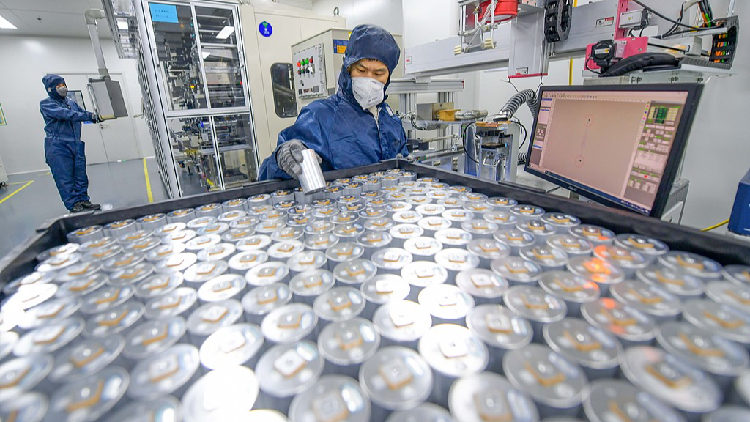
Chinese Team Introduces Smart Firewall Electrolyte for Battery Safety
A Chinese research team developed a non-flammable electrolyte for sodium-ion batteries that prevents thermal runaway, enhancing safety.