

China's Conservation Action Plan Enhances Wetlands and Culture
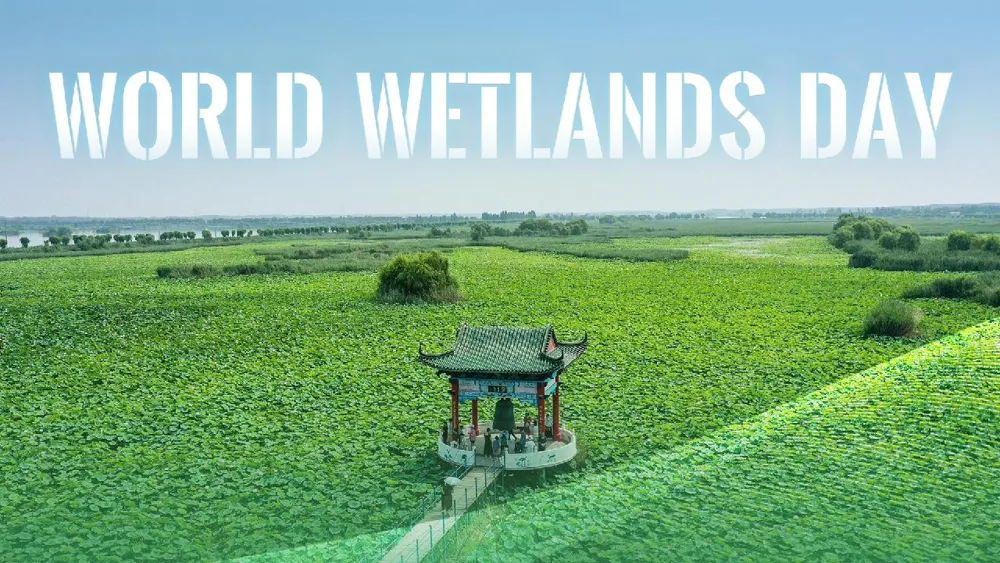
February 2 marks the 30th World Wetlands Day. The 2026 theme, 'Wetlands and Traditional Knowledge: Celebrating Cultural Heritage,' emphasizes the profound connections between wetlands and the cultural practices, livelihoods, and knowledge systems of communities worldwide.
Wetlands are not just ecological areas; they are also cultural landscapes where generations have cultivated traditional ecological knowledge related to water use, agriculture, fisheries, and sustainable resource management.
Such knowledge, developed through long-term interactions between people and nature, continues to support modern wetland conservation and sustainable development.
The 14th Meeting of the Conference of the Contracting Parties (COP14) to the Ramsar Convention on Wetlands took place in 2022 in Wuhan, the capital of Hubei Province in central China, recognized as an 'international wetland city.' In a speech delivered via video at the opening ceremony, Chinese President Xi Jinping pledged that China will strive for a harmonious modernization between humanity and nature, advance high-quality development in wetland conservation efforts, and foster international exchanges and cooperation.
Despite making up only about six percent of the Earth’s land surface, wetlands support 40 percent of all plant and animal species while providing essential ecosystem services, including water regulation and flood control.
However, wetlands face serious threats from human activities and climate change, leading to rapid loss and degradation.
China has made considerable progress in enhancing legal and institutional measures for the protection of wetlands in recent years, including the enforcement of the Wetland Protection Law and the development of supportive policies aimed at advancing wetland restoration initiatives.
To date, regulations for wetland protection at the provincial level have been established in 21 regions, and 82 internationally important wetlands have been designated. Additionally, 903 national wetland parks have been created, with about 90 percent open to the public, attracting around 320 million visits annually.
Wetland restoration efforts have led to the implementation of over 3,800 projects, adding or restoring more than one million hectares of wetlands. This includes around 290,000 hectares of scientifically restored wetlands during the 14th Five-Year Plan period, with the national wetland area currently totaling 55.6 million hectares.
By integrating traditional ecological knowledge with modern science and community engagement, China’s wetland conservation practices offer valuable insights into balancing ecological protection, cultural heritage, and sustainable development.
This combines to resonate with the core message of World Wetlands Day 2026, aiming to recognize and reinforce the critical role that wetlands play in both environmental sustainability and cultural identity.
Read These Next

Eye-Scanning Tech: Verifying Humanity in Digital Interactions
Exploring the introduction of eye-scanning technology by Tinder and Zoom for user verification and its implications in a digital world rife with AI impersonation.
Can a Digital Twin Create a 'Superworker'?
This article explores the potential of digital twins, like Richard Skellett's AI counterpart, to transform ordinary workers into 'superworkers' by enhancing their productivity and addressing key considerations around governance and ethical use.

Quantum Computing: Can Europe Lead the Tech Race?
An overview of the potential for Europe, particularly France, to lead in the quantum computing race, highlighting key players and their innovative approaches.