

Walk Again Program Offers Hope for Paralysis Recovery
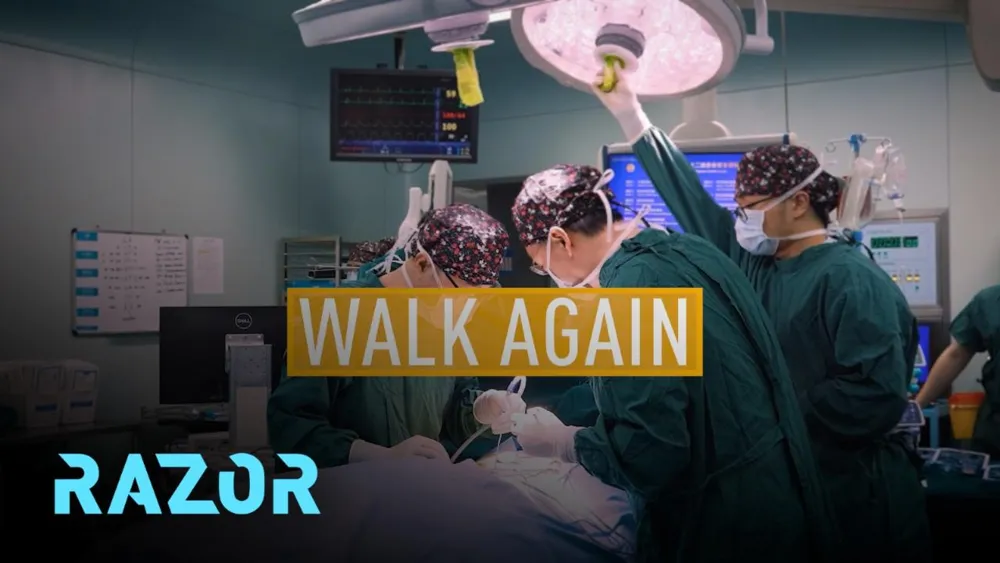
More than 15 million people globally contend with the challenges of spinal cord injuries, with many experiencing the heavy burden of permanent paralysis. However, a pioneering technology developed in China is stirring hope among these individuals, presenting a potential pathway to recovery.
In Hangzhou, a collaborative effort between doctors at the Second Affiliated Hospital of Zhejiang University School of Medicine and engineers from Zhejiang University has birthed an innovative treatment known as a closed-loop spinal cord neural interface.
This cutting-edge system utilizes epidural electrical stimulation (EES) combined with sophisticated algorithms to restore communication between the brain and body. By deploying electrodes placed along the spinal cord, the device sends carefully calibrated electrical signals that activate the muscles necessary for standing and walking.
Moreover, wearable sensors and mobile applications collect real-time data, enabling continuous adjustments to the stimulation based on feedback from both patients and healthcare providers throughout the rehabilitation process.
Reya El-Salahi from Razor had the opportunity to witness a dramatic procedure firsthand, accompanying a patient named Mr. Fang, who has faced paralysis for over two years, as surgeons implanted electrodes that may facilitate his ability to walk again.
Mr. Fang's experience is mirrored by the journeys of other patients, such as Jiang, who experienced a life-altering fall, and Jin, a construction worker who has remarkably regained the ability to walk hundreds of meters daily following his surgery.
This monumental advancement represents the convergence of neuroscience, engineering, and artificial intelligence, raising the question of whether such technologies could redefine the future of paralysis treatment.
Read These Next

Eye-Scanning Tech: Verifying Humanity in Digital Interactions
Exploring the introduction of eye-scanning technology by Tinder and Zoom for user verification and its implications in a digital world rife with AI impersonation.

Can a Digital Twin Create a 'Superworker'?
This article explores the potential of digital twins, like Richard Skellett's AI counterpart, to transform ordinary workers into 'superworkers' by enhancing their productivity and addressing key considerations around governance and ethical use.

Quantum Computing: Can Europe Lead the Tech Race?
An overview of the potential for Europe, particularly France, to lead in the quantum computing race, highlighting key players and their innovative approaches.