

China's Brain-Computer Interface Tech Advances to Clinical Trials
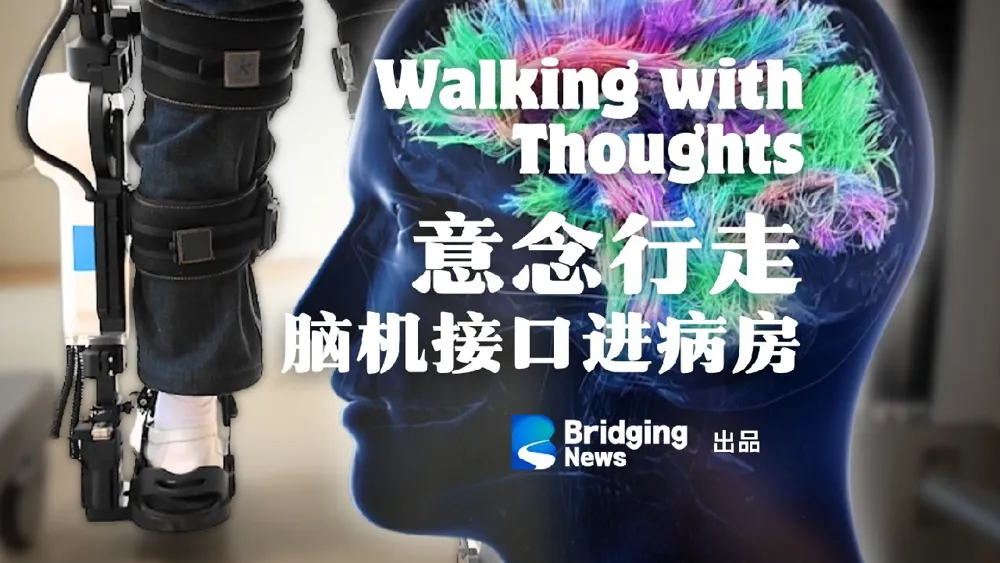
China is experiencing significant advancements in Brain-Computer Interface (BCI) technology, which was recently highlighted in the government's 2026 work report. The city of Chongqing is making notable progress, transitioning from research and development to clinical trials.
On March 26, at the Second Affiliated Hospital of Chongqing Medical University, a patient referred to as Mr. Wang (a pseudonym) tested BCI technology during his rehabilitation for stroke-related issues. Utilizing brainwave control along with wearable devices, he demonstrated the ability to move his limbs without the need for active physical effort.
After suffering weakness in his left leg due to a stroke, Mr. Wang sought treatment at the hospital after discovering BCI technology's potential benefits. "Before the treatment, my leg felt weak. After the training, I felt more relaxed and had a bit more strength when walking. The results are quite positive," he noted, shedding light on his personal experience.
The essence of BCI technology lies in establishing a direct communication link between the brain and external devices. It allows for the identification of brain signals, interpreting the brain's intentions, and translating these signals into commands for computers and devices.
This innovative technology holds promise for treating and rehabilitating neurological conditions, including the aftereffects of strokes and Parkinson's disease, enabling patients to regain limb function and improve their overall quality of life.
BCIs are generally categorized into two types: non-invasive and invasive. Non-invasive BCIs achieve therapeutic results through wearable devices without the need for surgery, while invasive BCIs involve the surgical implantation of electrodes into the brain, allowing direct interaction with neurons.
The major distinction between these two types is the level of precision in acquiring brain signals, with invasive methods providing greater signal accuracy. Chen Yangmei, Director of Neurology at the Second Affiliated Hospital, explains that both types share a common working principle.
As BCI technology progresses globally from R&D to clinical trials, the market potential is substantial. Precedence Research estimates that the global BCI market was valued at around $2.94 billion in 2025 and anticipates it will grow to $3.33 billion by 2026, reaching approximately $13.86 billion by 2035.
The healthcare needs driven by the large population of patients affected by neurological disorders provide a strong incentive for the BCI industry. The World Health Organization's Global Status Report on Neurology states that neurological conditions impact over 40% of people worldwide, affecting more than 3 billion individuals yearly.
Within this lucrative sector, Neuralink, founded by Elon Musk, is gaining attention for its plans to mass-produce BCI devices starting in 2026. The company is also innovating with a more automated surgical process aimed at reducing the risks associated with invasive operations.
Despite the bright future of BCI technology, it still faces challenges, particularly in effectively interpreting signals once electrodes are implanted, improving signal decoding methodologies, and enhancing computational capabilities. Continued advancements are essential to overcome these hurdles.
Read These Next

New Hope for Advanced Liver Cancer with Combination Therapy
Liver cancer poses major challenges in China, but new treatments and a large database aim to improve patient care and outcomes.

Chinese Vice Premier Urges Enhanced Cooperation with WIPO
China's Vice Premier Ding Xuexiang calls for stronger ties with WIPO to enhance global intellectual property and innovation.

China's AI Ambition Reflected in OpenClaw Frenzy
This article explores the rise of OpenClaw, China's AI assistant, which symbolizes a national push for artificial intelligence innovation and automation.