

SpaceX Rocket Failure Raises Pollution Concerns
The recent revelations about space debris and atmospheric pollution matter because they highlight a pressing issue at the intersection of technology and environmental impact. As more rockets are launched, the likelihood of debris re-entering the atmosphere increases, which could pose significant risks not only to our environment but also to public health. For instance, the February 2025 malfunction of a SpaceX Falcon 9 rocket that caused a fireball over Europe has led scientists to connect its debris with a plume of lithium, raising concerns about the broader implications of such incidents on our atmosphere.
Space debris refers to non-functional spacecraft, spent rocket stages, and other fragments orbiting Earth. When these pieces re-enter the atmosphere, they can vaporize and potentially release harmful materials, as demonstrated by the Falcon 9 incident. In this case, researchers detected an increase in atmospheric lithium levels—previously unknown to be linked with space debris—indicating a 10-fold rise in this element at around 100 km above the surface. To put this in perspective, while Earth naturally receives about 50-80 grams of lithium daily from meteorites, the Falcon 9 rocket could introduce approximately 30 kg of lithium, showcasing the scale of potential pollution with heightened space activities.
Looking ahead, the implications of increased space launches extend beyond just pollution; they may disrupt the atmosphere's natural aerosols and their climate regulation functions. This could lead to issues similar to historical precedents like the chlorofluorocarbons (CFCs) that damaged the ozone layer. With Musk's ambition to launch one million satellites, the challenge of managing atmospheric health amid commercial space activities grows. As researchers like Prof. Robin Wing point out, early measurements and proactive regulations could help prevent future issues linked to space debris and its environmental impact. It raises a critical question: are we prepared to regulate our activities in space adequately to protect our atmosphere?
Read These Next
Seedance 2.0: A Game-Changer in AI Video Content
The rise of Seedance 2.0 by ByteDance heralds a new age in AI-generated content, causing ripples in Hollywood while highlighting issues of copyright and ethics in creative industries.
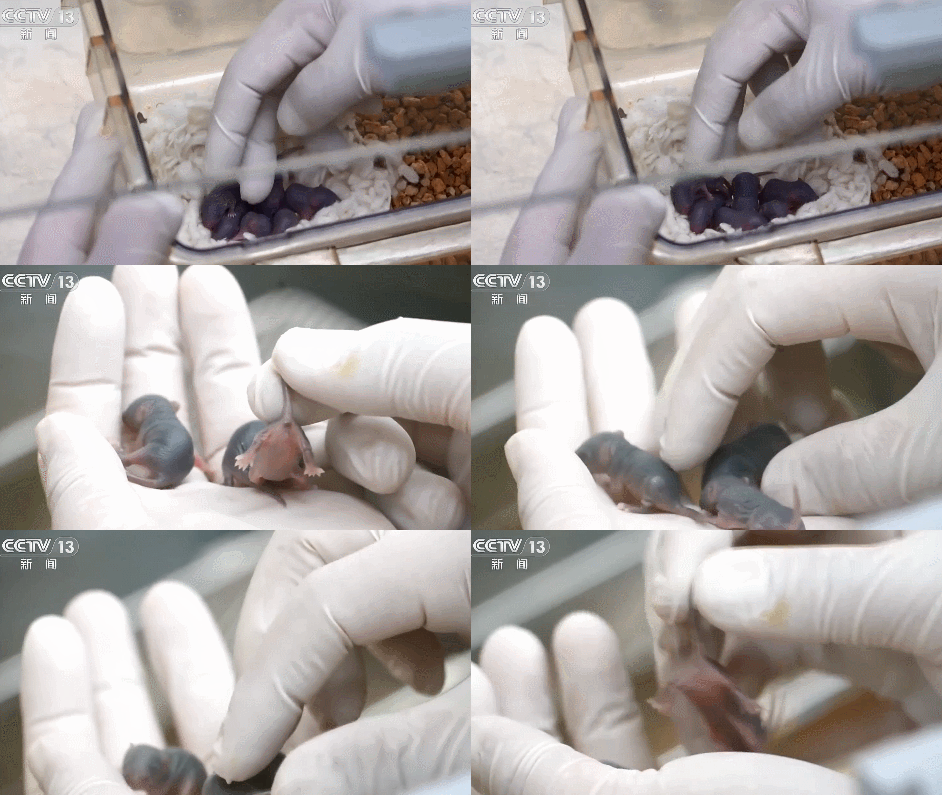
Space Mouse Welcomes First Generation of Pups for Research
A female mouse from China's Shenzhou-21 spacecraft has given birth to nine pups, advancing understanding of space travel's effects on reproduction.

China to launch flagship science journal Vita in spring 2026
Vita, a new life sciences journal from Westlake University, launches in spring 2026 with global expert input and preprint sharing.