

Climate Impact on Food Supply Becomes Global Emergency
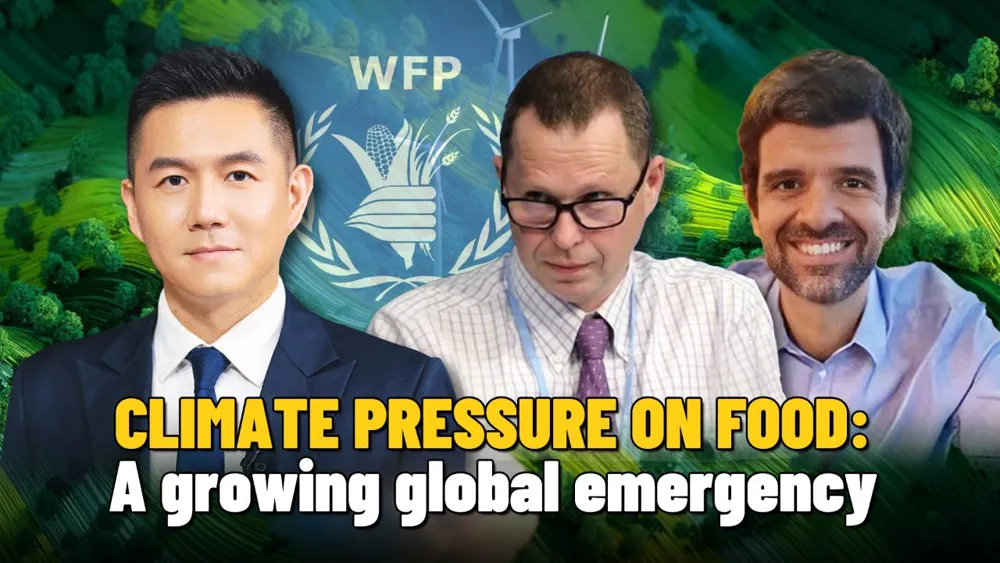
Climate change is increasingly becoming a critical factor reshaping the global food production landscape. As temperatures rise and weather patterns become more unpredictable, the impacts of extreme events such as heatwaves, droughts, and floods are being felt acutely across agricultural sectors. These conditions raise pressing questions about food security and accessibility, pushing us to reconsider how we approach global food systems.
In a recent episode of The Hub, host Wang Guan engages in a compelling dialogue with Richard Choularton, the director of Climate and Resilience at the World Food Programme, and Raphael Leão, a program policy officer for Latin America and the Caribbean with the WFP, based in Panama. Their discussion highlights how climate-related pressures are contributing significantly to the ongoing global food crisis.
The experts emphasize that the volatility in weather conditions is not only affecting crop yields but is also threatening to undermine the resilience of food systems, especially in vulnerable regions. With events like the United Nations Environment Assembly taking place this week in Nairobi, it is a crucial time to examine these challenges and explore effective strategies.
The dialogue addresses the need for immediate action to fortify food systems against climate threats. The experts note that enhancing resilience is not just about improving agricultural practices; it also requires a multifaceted approach involving policy changes, investment in technology, and building community-based systems that can withstand environmental shocks.
Choularton and Leão point out that while the challenges are formidable, there are various paths nations can take to bolster their food security. Stronger collaboration at the international level and sharing of best practices among countries can play a vital role in forming more resilient food systems.
As discussions unfold at international forums, it is imperative for policymakers to listen to the insights from experts and integrate them into actionable plans. This approach will create opportunities for communities globally to adapt to the changing climate and safeguard their food supplies.
The conversation also underscores the urgency needed in addressing these issues. With climate change already exerting severe pressure on harvests worldwide, the necessity for proactive measures has never been more significant. The call to action is clear: immediate, coordinated efforts are essential in ensuring long-term sustainability in food production.
Ultimately, fostering resilience in food systems is not merely an environmental concern but a matter of global security that will affect millions. As countries gather to confront these pressing challenges, the outcomes will have far-reaching implications for the future of agriculture and food security worldwide.
Read These Next

Space Mouse Welcomes First Generation of Pups for Research
A female mouse from China's Shenzhou-21 spacecraft has given birth to nine pups, advancing understanding of space travel's effects on reproduction.

SpaceX Rocket Failure Raises Pollution Concerns
This article explores the connection between space debris and atmospheric pollution, specifically highlighting the recent findings related to a SpaceX rocket failure and its environmental implications.

China to launch flagship science journal Vita in spring 2026
Vita, a new life sciences journal from Westlake University, launches in spring 2026 with global expert input and preprint sharing.