

China's Strategy to Eradicate Cervical Cancer Aligned with WHO Goals
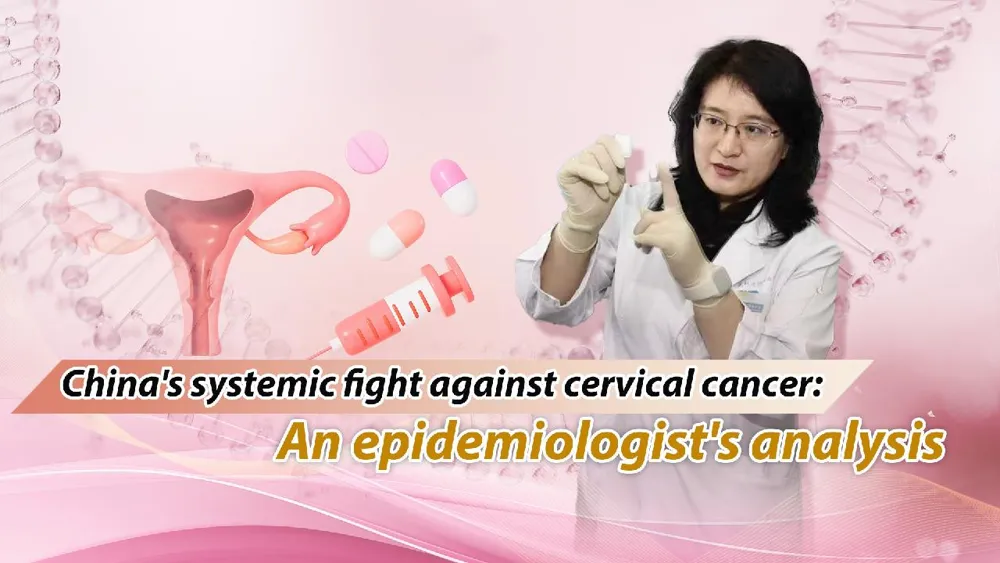
January marks Cervical Cancer Awareness Month, a crucial time for raising awareness about the preventable nature of this devastating disease. The World Health Organization calls for accelerated action against cervical cancer, which is primarily caused by persistent infection with the human papillomavirus (HPV). Through vaccination, screening, and timely treatment, cervical cancer is among the few cancers that can be eradicated.
In recent years, China has been building an extensive prevention framework aimed at mitigating the impact of cervical cancer. CGTN recently interviewed Professor Zhao Fanghui, director of the Department of Cancer Epidemiology at the National Cancer Center, who has dedicated her career to cervical cancer prevention since the late 1990s. Her insights illuminate China's evolution from learning swiftly from international practices to becoming an ambitious leader in cancer control.
Despite being preventable and treatable when detected early, cervical cancer remains the fourth most common cancer among women globally. In China, the burden is staggering; in 2022, approximately 151,000 new cases were diagnosed, with around 56,000 fatalities attributed to this disease, which represents nearly 20% of the global total.
In response to these alarming statistics, China is systematically enhancing its healthcare infrastructure through a multi-faceted approach that includes HPV vaccination, early detection via screening, and standardized treatment protocols. Professor Zhao has noted the transformative effects of these efforts observed during her tenure.
The introduction of a domestically developed HPV vaccine in 2019 marked a critical milestone for China, allowing the nation to become the third in the world to produce an HPV vaccine independently. This achievement was crucial in increasing accessibility and reducing reliance on imported products, although challenges remain in ensuring nationwide coverage.
To optimize the national vaccination strategy, Professor Zhao's team has conducted extensive health economics and modeling studies tailored to China’s unique context. Their findings have supported significant policy decisions regarding the integration of HPV vaccines into the national immunization program, leading to the official inclusion of HPV vaccination starting November 2025 for girls born after November 10, 2011.
The WHO applauded this move, emphasizing it as a major advancement in women's health in China and a step closer to the global objective of cervical cancer elimination. Public education and awareness will be crucial in translating health recommendations into action, as highlighted by Professor Zhao.
China's growing vaccine production capacity not only meets domestic needs but also addresses global supply shortages. WHO-prequalified Chinese vaccines are now viable options for international procurement, enhancing global health efforts.
In terms of screening, collaborative innovations have led to the creation of a rapid, cost-effective HPV test that significantly reduces expenses for detection. The implementation of nearly 290 million free screenings has identified over 900,000 cases of cervical cancer or precancerous lesions, reinforcing the value of early detection in mitigating this health crisis.
Advancements in technology, including AI-assisted colposcopy, are reshaping the landscape of cervical cancer screening and treatment in China. These innovations ensure more efficient identification of at-risk individuals and facilitate a well-integrated care system that tracks patient data and enables effective follow-ups.
As the incidence of cervical cancer increasingly affects younger women, preserving fertility is becoming a pivotal concern. China is making strides in developing non-surgical treatment options that safeguard reproductive health while tackling HPV infections, with new therapies undergoing clinical trials.
China is also committed to sharing its innovations and experiences internationally, offering training programs for healthcare professionals from various countries. By exporting expertise and technologies, such as demonstrated projects in Nepal, China aims to support the global fight against cervical cancer. Professor Zhao believes that empowering local professionals and facilitating knowledge-sharing will help ensure sustainable strategies align with WHO’s goal to eliminate cervical cancer.
Read These Next
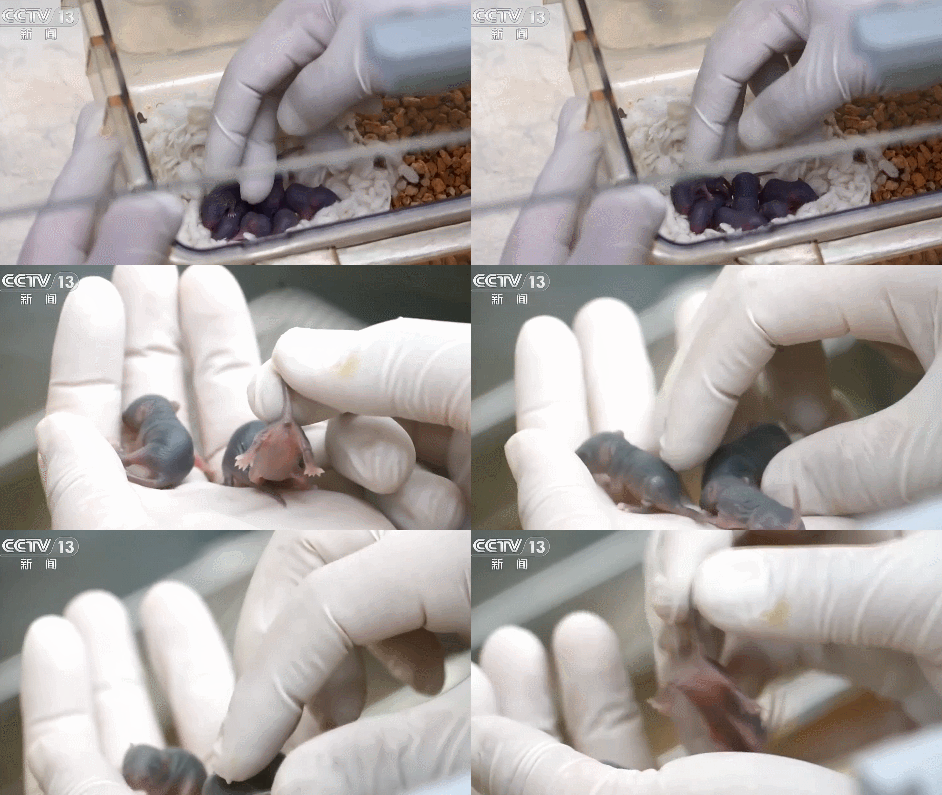
Space Mouse Welcomes First Generation of Pups for Research
A female mouse from China's Shenzhou-21 spacecraft has given birth to nine pups, advancing understanding of space travel's effects on reproduction.

SpaceX Rocket Failure Raises Pollution Concerns
This article explores the connection between space debris and atmospheric pollution, specifically highlighting the recent findings related to a SpaceX rocket failure and its environmental implications.

China to launch flagship science journal Vita in spring 2026
Vita, a new life sciences journal from Westlake University, launches in spring 2026 with global expert input and preprint sharing.