

Weight-loss drug shows potential for osteoarthritis treatment

Recent research has unveiled that semaglutide, a well-known weight-loss medication, may offer significant cartilage-protective effects in metabolic osteoarthritis patients, independent of its weight-loss benefits. This revelation could reshape how this medication is viewed in the context of treating osteoarthritis.
Led by researchers from the Shenzhen Institutes of Advanced Technology and Jinan University, the study was published in Cell Metabolism. The authors, Tong Liping, Chen Di, John Speakman, and Zhang Huantian, discovered that semaglutide positively influences glucose metabolism in osteoarticular cells, which could alleviate some of the pathological advancements associated with osteoarthritis.
For the first time, this study confirms that semaglutide impacts osteoarticular cell metabolism, providing potential new pathways for medical research into metabolic osteoarthritis treatment. The implications of these findings underline the need to consider semaglutide not only for its weight-loss effects but also as a therapeutic option for joint health.
Semaglutide functions as a GLP-1 receptor agonist, primarily engineered for managing blood sugar levels in individuals diagnosed with type 2 diabetes. In recent times, public attention has surged due to its abilities to facilitate notable weight loss, earning it a reputation as a weight-loss wonder drug.
In the study, researchers developed an obese mouse model simulating metabolic osteoarthritis through surgical intervention combined with a high-fat diet. Mice in the experiment were split into two groups to assess the varying impacts of semaglutide versus dietary control on their condition.
One group of mice received semaglutide treatment, while the other adhered to a controlled diet under a pair-feeding protocol that ensured both groups achieved similar weight-loss results. Despite their comparable weight reduction, the outcomes for each group differed substantially in terms of joint health.
After a 12-week treatment duration, results showed that semaglutide-treated mice had significant improvements, including decreased cartilage degeneration, reduced inflammation, and lower osteophyte formation. Conversely, those on the strictly controlled diet did not exhibit any cartilage-protective enhancements.
"This controlled experiment underscores that semaglutide's beneficial impact on cartilage health in osteoarthritis occurs independently of weight loss," remarked researcher Chen Di. This finding challenges existing assumptions that improvements in osteoarthritis conditions are solely dependent on achieving weight loss.
Read These Next
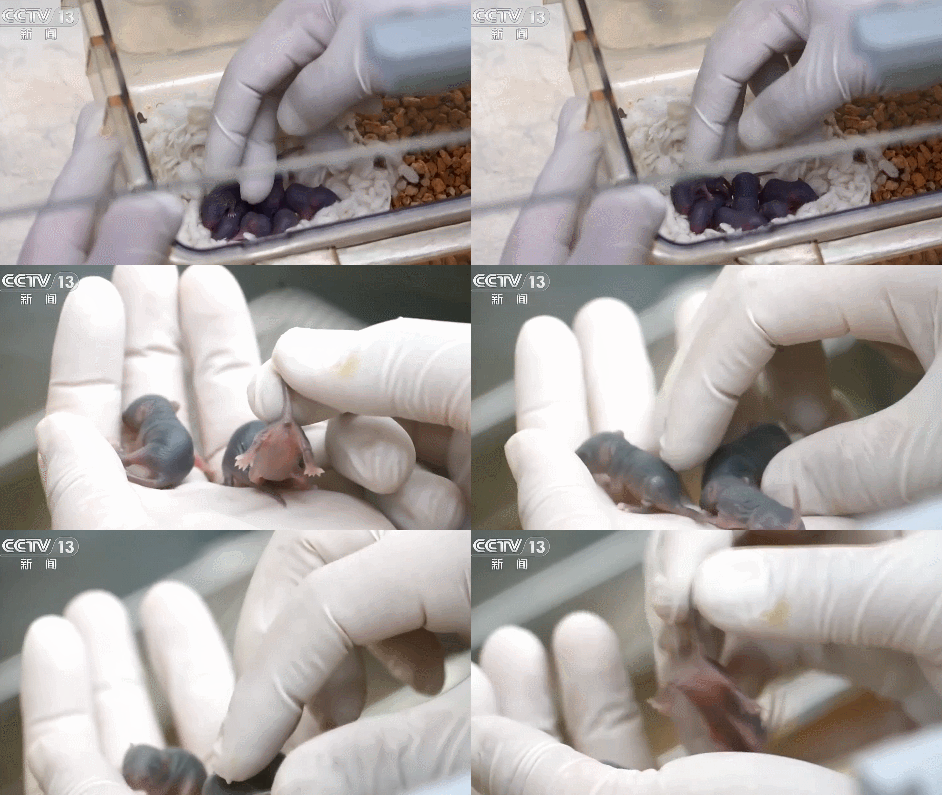
Space Mouse Welcomes First Generation of Pups for Research
A female mouse from China's Shenzhou-21 spacecraft has given birth to nine pups, advancing understanding of space travel's effects on reproduction.

SpaceX Rocket Failure Raises Pollution Concerns
This article explores the connection between space debris and atmospheric pollution, specifically highlighting the recent findings related to a SpaceX rocket failure and its environmental implications.

China to launch flagship science journal Vita in spring 2026
Vita, a new life sciences journal from Westlake University, launches in spring 2026 with global expert input and preprint sharing.