

East Asian Cattle History Unveils Prehistoric Civilizations
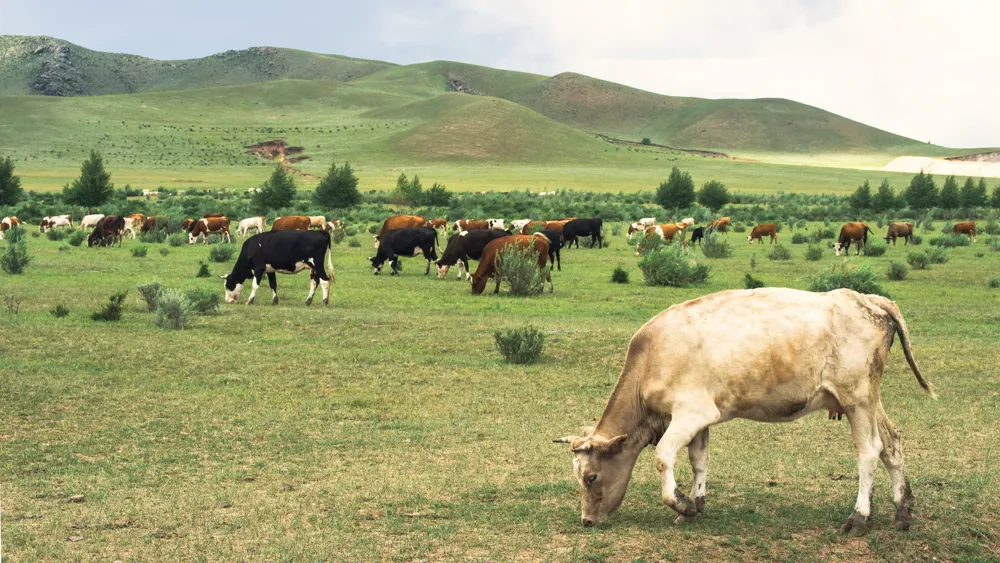
Recent research has unveiled a comprehensive genetic map that traces the origins and migrations of domestic cattle in East Asia, shedding light on the complex interactions among ancient civilizations, particularly along the historical Silk Road routes.
This groundbreaking study, spearheaded by Professor Cai Dawei of Jilin University in collaboration with researchers from Seoul National University and various archaeological institutions in China, was published online in the journal Science.
The researchers meticulously analyzed 166 ancient bovine samples collected from a multitude of archaeological sites across China, spanning nearly 10,000 years, resulting in one of the largest and most complete time-series genomic datasets of ancient cattle in East Asia.
Their findings challenge the traditional view that domestic cattle in this region originated from a single source, indicating instead a gradual emergence facilitated by repeated external introductions and robust genetic integration with local populations.
Cattle have historically occupied a pivotal role in agropastoral societies throughout East Asia, with Professor Cai emphasizing that genomic studies in different regions reveal a complex evolutionary story driven by multiple dispersal events and extensive admixture.
As early as 5,000 years ago, during the late Neolithic period, taurine cattle made their way into the Yellow River basin, a central region of ancient Chinese civilization where they interbred with local wild aurochs, resulting in early domestic cattle with distinct regional traits.
In contrast, the early cattle in the Xinjiang region exhibited genetic influences from both Western taurine and South Asian indicine breeds, suggesting a backdrop of multiple introductions into East Asia.
These unique genetic characteristics gradually spread eastward into the Yellow River basin, influencing the genetic constitution of cattle in northern China from the Bronze Age through the Iron Age.
Professor Cai noted that the evolutionary trajectory outlined in this study not only illustrates the dispersion of cattle across East Asia but also reflects the longstanding cultural exchanges between eastern and western Eurasia.
Overall, this research offers enlightening insights into cross-continental human migration, technological diffusion, and the early exchanges that shaped ancient civilizations, reinforcing the significance of cattle in the context of cultural heritage.
Read These Next
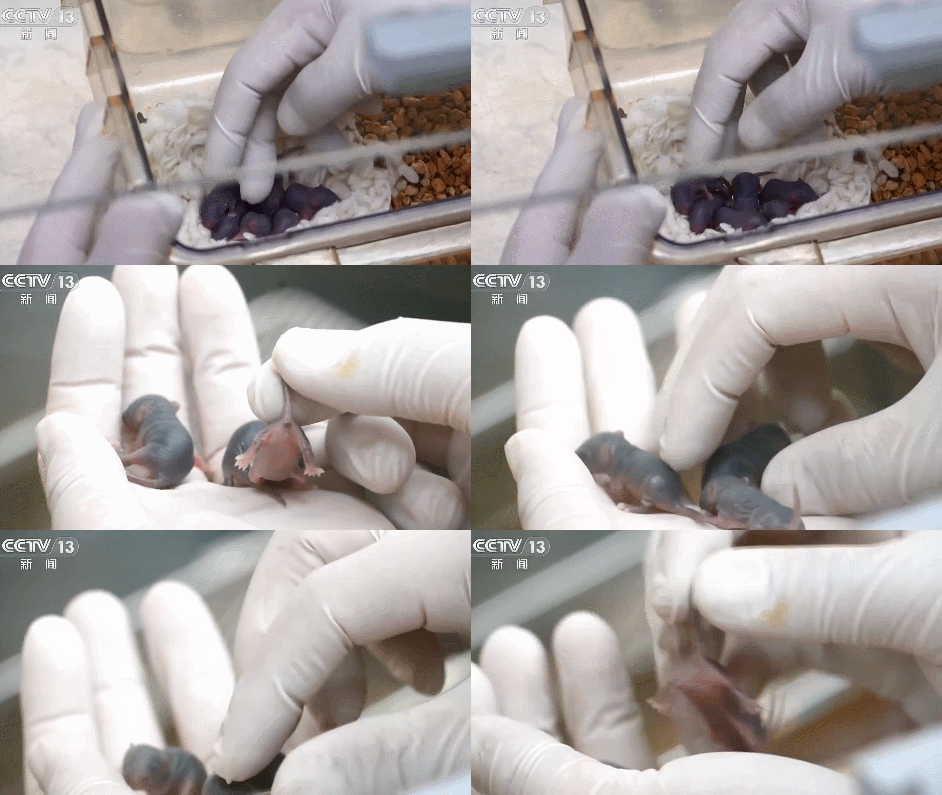
Space Mouse Welcomes First Generation of Pups for Research
A female mouse from China's Shenzhou-21 spacecraft has given birth to nine pups, advancing understanding of space travel's effects on reproduction.

SpaceX Rocket Failure Raises Pollution Concerns
This article explores the connection between space debris and atmospheric pollution, specifically highlighting the recent findings related to a SpaceX rocket failure and its environmental implications.

China to launch flagship science journal Vita in spring 2026
Vita, a new life sciences journal from Westlake University, launches in spring 2026 with global expert input and preprint sharing.