

China Unveils Humanoid Robot Designed for Autism Therapy

In a significant advancement for autism therapy, a pioneering humanoid medical robot has been launched in Fuzhou, the capital city of southeastern Fujian Province. Developed by the AI research institute at Fujian University of Technology, this robot is the first of its kind in China to integrate non-invasive brain-computer interface technology. It aims to support individuals with autism by facilitating therapy through interactive engagement.
With this groundbreaking innovation, researchers and healthcare specialists are optimistic about the new opportunities it creates for autism rehabilitation and long-term care. The robot is designed to address the critical need for early diagnosis and personalized intervention, issues that have long challenged families and clinicians dealing with autism.
This humanoid robot stands out due to its ability to monitor neural signals in real time, enabling it to understand a child's emotional state and adapt its interactions accordingly. By facilitating structured sessions that include social-emotional games, the robot can evaluate both behavioral patterns and neurological responses, thereby delivering a more comprehensive assessment.
Professor Wu Yang, who leads the project, highlighted the importance of the integration of robotics with artificial intelligence and emotion recognition. This innovative approach is set to revolutionize the current methodologies used in autism intervention, potentially filling critical gaps in therapy where human resources may be limited.
As the demand for autism support continues to grow, especially in a country where over 13 million people are affected, the introduction of this humanoid robot could be a game changer. Its ability to provide consistent therapy and collect objective data can significantly enhance the therapeutic processes during the formative years of a child's development.
While the humanoid robot demonstrates immense potential, challenges regarding cost and accessibility remain. As a prototype incorporating advanced technology, it is currently expensive, warranting further research and cost-reduction strategies to make it more widely available in both clinical and home environments.
Despite these challenges, the vision for this robot is not to replace human therapists but to augment their capabilities. By offering consistent and reliable therapeutic interactions, the device can enhance early diagnosis and support, allowing healthcare professionals to dedicate more time to complex emotional care, which technology cannot replicate.
Professor Wu and his team are focusing on enhancing the robot's emotional intelligence algorithms and therapeutic interaction library. The goal is to develop a tool that can be widely adopted in special-needs schools and diagnostic centers, providing engaging support for children undergoing therapy.
Ultimately, this development underscores a promising intersection of science and technology with healthcare innovation. It is a move toward a future where robots can play an essential role in supporting autism care and improving the lives of those affected by the condition.
As the project progresses, there are plans to expand the robot's application beyond autism rehabilitation, aiming to assist individuals with other neurological disorders, such as stroke or spinal cord injuries, which could broaden the scope of its therapeutic benefits.
Read These Next
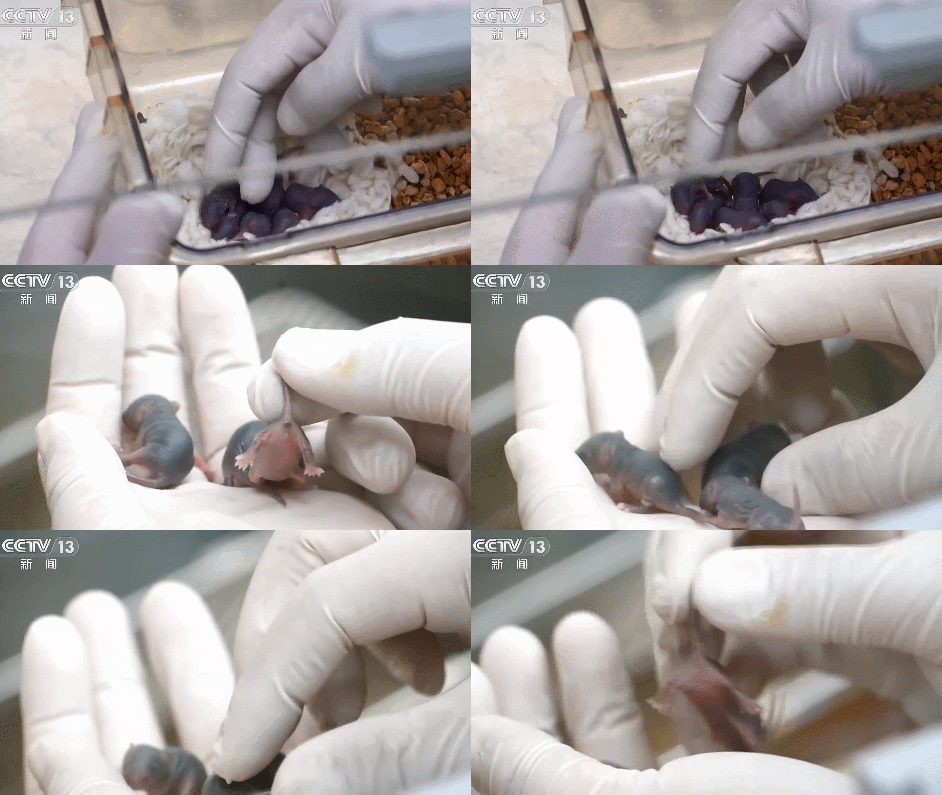
Space Mouse Welcomes First Generation of Pups for Research
A female mouse from China's Shenzhou-21 spacecraft has given birth to nine pups, advancing understanding of space travel's effects on reproduction.

SpaceX Rocket Failure Raises Pollution Concerns
This article explores the connection between space debris and atmospheric pollution, specifically highlighting the recent findings related to a SpaceX rocket failure and its environmental implications.

China to launch flagship science journal Vita in spring 2026
Vita, a new life sciences journal from Westlake University, launches in spring 2026 with global expert input and preprint sharing.