

Serbian Scientists Test Mealworms for Polystyrene Degradation
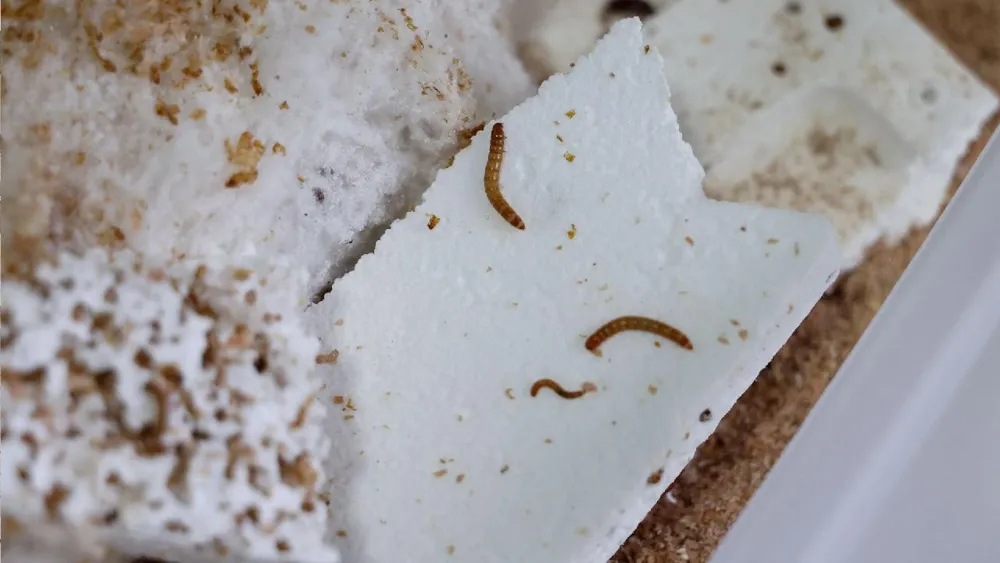
Serbian scientists have embarked on an innovative approach to tackle plastic pollution by exploring the use of mealworms for the degradation of polystyrene. This initiative not only aims to enhance waste management practices but also represents a significant step towards sustainable environmental solutions.
Larisa Ilijin, a principal research fellow at Belgrade's Institute for Biology, has highlighted the remarkable ability of mealworms to digest various plastics, particularly polystyrene, a material commonly found in packaging, insulation, and food containers.
Supported by the government, the United Nations Development Programme (UNDP), and other international donors, the project has seen polystyrene integrated into the diet of the larval stage of the yellow mealworm beetle, known scientifically as Tenebrio molitor.
While mealworms typically consume a wide array of organic materials, they require specific training to efficiently digest plastic products. Ilijin noted that the larvae have been adapted over an extended period to enhance their plastic biodegradation capabilities.
The bacteria residing in the mealworms' gut are instrumental in breaking down plastics into benign byproducts, namely carbon dioxide and water, with no signs of microplastic residues being left in their waste. This breakthrough aligns with similar research efforts observed in the United States and Africa.
Despite Serbia's ambition to join the European Union, its current recycling rate stands at a mere 15 percent for municipal waste, which is significantly below the EU target of 55 percent. Alarmingly, household waste recycling rates are even lower, at less than 2 percent.
Additionally, over 84 percent of the country’s waste is directed to approximately 3,000 unregulated landfill sites, filled with plastics, cardboard, paper, and organic matter. This situation underscores the urgency for Serbia to adopt effective waste treatment solutions that align with EU standards.
"Styrofoam takes over 500 years to decompose in nature, making the use of mealworms a promising solution for mitigating plastic waste problems," stated Ilijin, emphasizing the potential of this project.
The Belgrade-based company, Belinda Animals, has been provided with multiple containers of mealworms by the institute and is in the process of breeding them, with plans to establish a network of similar facilities.
"When mealworms break down one kilogram of Styrofoam, they only emit one to two grams of carbon dioxide, a stark contrast to the over 4,000 grams released when Styrofoam is incinerated," said Boris Vasiljev, the owner of Belinda Animals.
While the application of mealworms as a method for recycling is still in its fledgling stages, Ilijin pointed out that Serbia must first establish regulations to allow the use and commercialization of insect-based products for animal feed.
Read These Next
Europe's Quantum Computing Tech Race
This article explores the significant advancements and challenges of quantum computing, particularly highlighting the efforts of French company Alice & Bob in revolutionizing technology through innovative qubit management and their potential impact on fields like medicine.
Chinese Team Introduces Smart Firewall Electrolyte for Battery Safety
A Chinese research team developed a non-flammable electrolyte for sodium-ion batteries that prevents thermal runaway, enhancing safety.

Amazon Ends Support for Older Kindles, Users Outraged
Amazon's decision to stop supporting older Kindle models has left many users frustrated and concerned about e-waste implications.