

Musk's Satellite Constellation: The Future of AI in Space

Elon Musk's ambitious vision of launching up to one million satellites into Earth's orbit is gaining traction, with his company SpaceX recently filing an application to the U.S. Federal Communications Commission. This plan, which has sparked considerable debate, aims to create what Musk calls "orbital data centers" to meet the surging demand for artificial intelligence (AI) computing power. As AI applications multiply globally, the existing terrestrial data centers—typically large warehouses filled with powerful computers—are beginning to struggle to keep up. The proposed satellite system is being pitched as a more cost-effective and energy-efficient solution, suggesting that it could serve billions of users worldwide by leveraging solar power.
The mechanics of this grand project hinge on positioning solar-powered satellites in low-Earth orbit at altitudes ranging from 500 to 2,000 kilometers. SpaceX's existing Starlink network, currently comprising nearly 10,000 satellites, has already faced scrutiny for contributing to congestion in space, a concern that industry experts echo regarding the proposed million-satellite constellation. Each satellite would work in concert to provide substantial computing capacity and could even evolve into a critical technology in the quest to transition to a Kardashev II civilization, a concept that envisions societies harnessing energy at a stellar scale. However, substantial challenges remain, including the complexity of maintaining such satellites in orbit, the high costs involved in launching hardware, and the looming threat posed by significant space debris that could lead to catastrophic collisions. This raises essential questions about the sustainability of our engagement with space—can we innovate without jeopardizing the integrity of Earth's orbit?
Read These Next

The Threat of AI Deepfakes in Politics
The article explores the rising concern of overseas content farms using AI to generate misleading political deepfakes, highlighting their mechanisms, implications for democracy, and the need for improved detection methods.
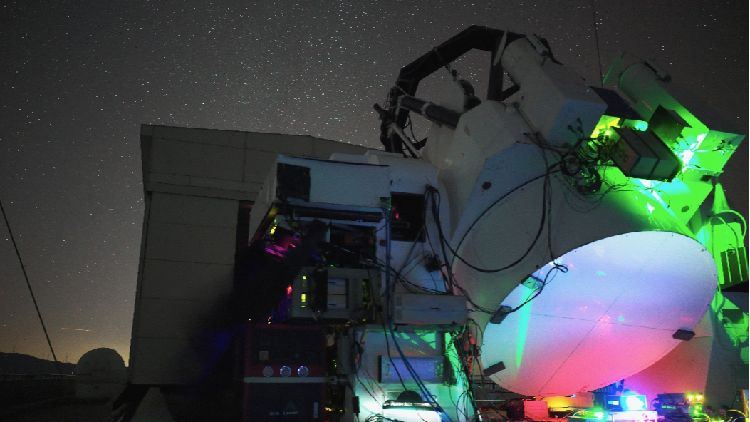
China Breaks Ground in Satellite-Ground Laser Communication
Chinese researchers achieved 1 Gbps laser communication between a satellite and ground, exceeding 40,000 km, for over three hours.

Grammarly's Ethical Misstep with AI Expert Personas
This article explores the ethical implications of Grammarly's recent incident involving its AI feature that imitated famous writers without their consent, highlighting the need for responsibility in tech innovation.