

China to Begin Mice Experiments on Space Station Soon
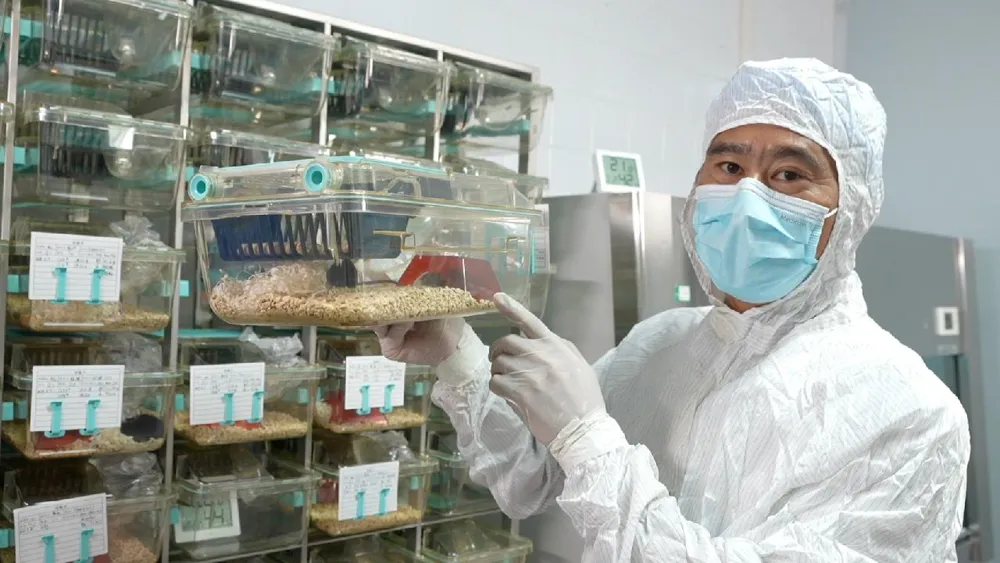
China is set to conduct groundbreaking experiments involving four mice on the Shenzhou-21 mission, aimed at understanding the effects of microgravity and confined space conditions on living organisms. This pioneering study marks the first time rodents will be used for scientific research in space, as confirmed by the China Manned Space Agency (CMSA).
During the Shenzhou-21 mission, which is scheduled for launch soon, two male and two female mice will accompany the crew and stay in a specialized habitat aboard China's space station. CMSA spokesperson Zhang Jingbo highlighted the significance of these experiments in assessing how rodents respond to the unique environmental challenges posed by space.
The research will focus on monitoring the behavior of the mice as they adapt to the microgravity environment. Post-mission, these rodents will return to Earth for detailed analysis aimed at understanding their stress responses and the adaptive changes their tissues and organs undergo in space.
"Our ultimate aim is to gain insights into how the space environment impacts long-term human spaceflight," stated Li Tianda, an associate researcher at the Institute of Zoology at the Chinese Academy of Sciences. Using mice as model organisms provides a valuable perspective on human physiological responses.
Mice are particularly suitable for this type of research due to their approximate 95 percent genetic similarity to humans. This trait allows scientists to draw meaningful comparisons and better understand potential implications for human health and behavior in space.
Liu Fangwu, an associate researcher at the Shanghai Institute of Technical Physics, described the advanced life support systems that will be operational within the space station habitat. The breeding unit equipped with the Shenzhou-21 includes features for gas purification, oxygen supply, and comprehensive on-orbit monitoring.
A key challenge faced by the researchers is waste management in the microgravity environment, where droppings could potentially float around. To address this, they have developed an automated waste collection system that utilizes directional airflow to direct waste to a designated module.
In addition to the mice experiments, the Shenzhou-21 mission will explore various cutting-edge scientific concerns, including a study on the homochirality of amino acids. Wu Yile from Ningbo University's Institute of Drug Discovery Technology emphasized the importance of examining the left-handed nature of amino acids, which has been a fundamental aspect of life on Earth.
The project is designed to discern whether the preference for left-handed amino acids is related to the gravitational conditions present on our planet. Wu noted that the microgravity environment aboard the space station presents an ideal setup for this research.
Overall, the Shenzhou-21 crew is set to execute 27 innovative scientific projects focusing on critical issues across diverse fields such as space life science, biotechnology, aerospace medicine, microgravity fluid physics, and combustion, demonstrating China's commitment to advancing space exploration.
Read These Next
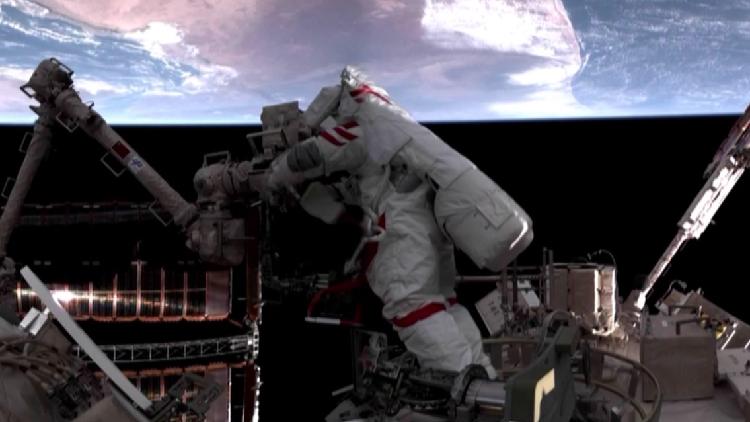
Shenzhou-21 Astronauts Install Debris Shields in First Spacewalk
Shenzhou-21 crew completed their first spacewalk on Dec 9, 2025, with tasks including space debris protection and inspections.
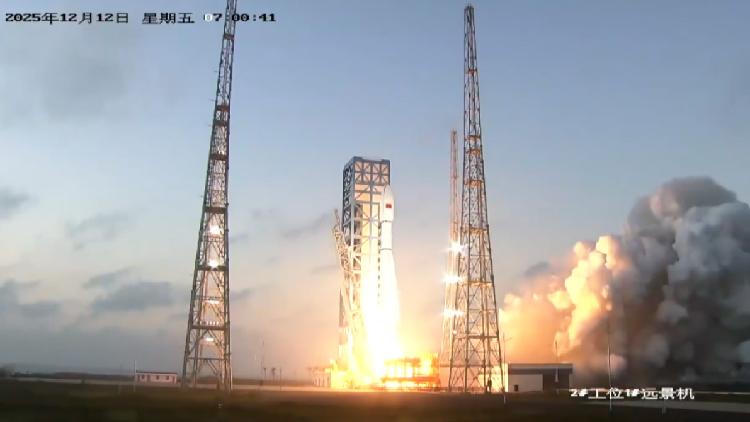
China launches internet satellites with Long March-12 rocket
China launched its 16th batch of LEO internet satellites using the Long March-12 rocket, enhancing its space-based internet network.

China's Healthcare Future What to Expect in Next Five Years
China's healthcare system advances with AI, focusing on elderly care and disease prevention for better health outcomes.