

China targets 80 years average life expectancy by 2030
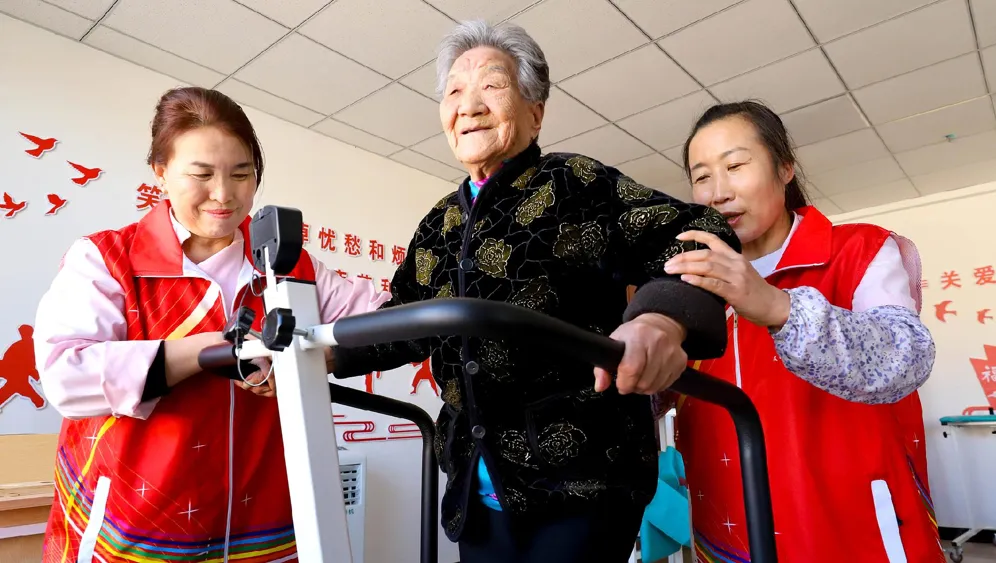
China is setting an ambitious target to enhance the average life expectancy of its citizens to 80 years by the year 2030. This initiative is part of a broader plan focusing on significant healthcare enhancements and disease prevention strategies, as outlined in a recent government work report.
During the previous five years under the 14th Five-Year Plan, China's average life expectancy reached 79.25 years, marking an impressive increase of 1.3 years. This growth underscores the progress made in the country's healthcare sector.
Life expectancy remains a critical measure of developmental success. According to the World Health Organization, it is ranked among the three core aspects of human development, alongside education and living standards.
The Human Development Index (HDI), which quantitatively assesses human development, ranges from 0 to 1, highlighting that higher HDI values indicate greater development. As per the United Nations Development Programme's 2025 Human Development Report, China boasts an HDI of 0.797.
"Life expectancy is a vital indicator that reflects a nation's overall development level. International trends suggest that once life expectancy surpasses 75 years, improvements become increasingly challenging to achieve. Despite this, China has managed to incrementally increase its life expectancy, averaging a gain of more than 0.25 years yearly during this period," said Wang Xiufeng from the Institute of Medical Information.
In several municipalities and provinces, including Beijing, Tianjin, and Shanghai, the average life expectancy has already exceeded 80 years, demonstrating successful health initiatives.
As of late 2024, the population of elderly individuals aged 60 and above in China is estimated at 310.31 million, which represents 22% of the national total. This demographic segment includes approximately 22.02 million people aged 65 and older, accounting for 15.6% of the population.
The foundation of China's healthcare advancements is its primary healthcare system, which has developed significantly over the years. Currently, the nation operates approximately 1.04 million primary medical institutions, supported by over 5.2 million healthcare workers dedicated to disease prevention and rehabilitation.
Leading experts emphasize the necessity of enhancing primary healthcare services to make medical treatment more accessible. Zhang Chaoyang, president of the Chinese Rural Health Association, highlighted the importance of comprehensive health management that includes disease prevention and rehabilitation.
To accommodate the rising elderly population during the upcoming 15th Five-Year Plan period (2026-2030), safeguarding the health of seniors is paramount to achieving the target of an average life expectancy of 80 years.
The director of the National Health Commission, Lei Haichao, indicated that a health-first strategy will be crucial, supported by recommendations from the Party for China's future economic and social development plans. Key initiatives will include enhancing public health capacity, strengthening infectious disease management, and ensuring robust healthcare services.
As part of the health-first approach, improvements in the monitoring and response to infectious diseases, enhancement of primary healthcare facilities, and expansion of long-term care insurance are on the agenda. "Putting health first represents a development priority that aligns with China's modernization efforts," Lei concluded.
Read These Next

China Releases Guidelines for Global Sustainable Development Cooperation
The NSFC issued guidelines for the SDIC to tackle global issues and enhance international research collaboration.

China Dominates Global Brain Computer Interface BCI Market
China approves world's first invasive BCI device for tetraplegia, enhancing hand movement control and expediting clinical use.

China Emerges as Leader in Global Scientific Publishing
At the Zhongguancun Forum in Beijing, Arnold Pippel noted China's lead in scientific publications and praised AI's role in research integrity.