

China to Launch Human Research Program at Space Station
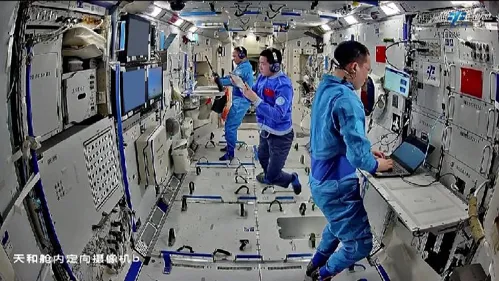
China will commence a human research program at its space station on April 1 to investigate the health impacts of microgravity on astronauts.
The China Manned Space Agency has announced its intent to solicit proposals for this human space research initiative, aiming to explore significant strategic, fundamental, and forward-looking scientific questions about the long-term health and survival of humans during upcoming space station missions and lunar landings.
The key objectives of the program include the creation of a space human atlas, the establishment of a comprehensive human research database, and the generation of innovative research outcomes that will enhance the health of taikonauts on extended missions and benefit public health on Earth.
Additionally, this initiative represents a vital component of China’s broader mission to advance its aerospace and technological capabilities, as described in the guidelines published recently by the agency.
The program will focus on studying human samples, organoids, and cells, examining how microgravity affects bones and muscles, as well as the long-term consequences of spaceflight and conditions following their return on cardiovascular health, metabolism, cognition, and the aging process.
Space medicine experiments hold a crucial position within the research agenda of the Chinese space station, known as Tiangong, which translates to Heavenly Palace. Since a public solicitation announcement was made in June 2023, a total of 387 projects have been presented, with 53 trials already conducted in the national space laboratory.
China has set its sights on achieving a crewed lunar landing by the year 2030. Moreover, this year, the Tiangong space station is scheduled to host two crews, with one taikonaut expected to remain in orbit for over a year. With long-duration missions becoming more routine, the health and well-being of taikonauts have garnered increasing public interest.
The research conducted in space medicine not only aims to support the health of astronauts but has also made strides in enhancing public health on Earth.
Li Yinghui, a researcher affiliated with the China Astronaut Research and Training Center, revealed that the nation has reached key milestones in this space, including its first studies involving a space organ chip and the creation of the world's first artificial blood vessel tissue chip. These achievements have provided critical theoretical and technological insights for research into heart health, muscle function, neurodegenerative conditions, aging, and drug safety evaluations.
Read These Next

Wuhan Robotaxi Outage Highlights Autonomous Vehicle Challenges
Explaining the recent robotaxi outage in Wuhan, highlighting its implications for autonomous vehicle technology and safety.
China Celebrates World Sleep Day with Healthy Sleep Initiatives
China Sleep Research Society marks World Sleep Day on March 21 with initiatives promoting sleep health and awareness.
Ancient Chinese Fish Fossils Spotlight Key Evolution Gap
China's discovery of two ancient fish fossils enhances our understanding of fish-to-human evolution, revealing earlier bony fish traits.