

Ancient Chinese Fish Fossils Spotlight Key Evolution Gap
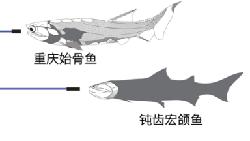
Recent discoveries in China have unveiled fossils of two ancient fish dating back over 400 million years, significantly enhancing our understanding of the evolutionary journey from fish to humans. One species is a small, streamlined fish, while the other represents a giant of its era, distinguished by its unusual teeth. These findings provide crucial insights into the evolution of bony fish and their ancestors.
A dedicated team from the Institute of Vertebrate Paleontology and Paleoanthropology (IVPP) of the Chinese Academy of Sciences (CAS) achieved these groundbreaking discoveries after more than a decade of research and fieldwork. The team has identified the earliest known complete bony fish fossil, Eosteus chongqingensis, discovered in Chongqing Municipality, and has thoroughly analyzed the head structure and tooth morphology of Megamastax amblyodus, the largest known vertebrate from the Silurian Period, found in Qujing, Yunnan Province.
The findings were published in two studies in the journal Nature, demonstrating China's vital role as a 'cradle' of early vertebrate evolution. Zhu Min, an academician from the IVPP, emphasizes that bony fishes form the primary branch of the vertebrate tree of life. The two existing lineages, ray-finned and lobe-finned fishes, have adapted to various ecological niches in aquatic and terrestrial ecosystems.
The significance of these discoveries lies in the long-standing mystery surrounding the origin of bony fishes. Until now, most existing fossils were specialized forms from later periods, hindering scientists' understanding of earlier evolutionary stages. Zhu explained that the morphology of the most recent common ancestor of ray-finned and lobe-finned fishes remained elusive due to a lack of primitive bony fish fossils.
Eosteus chongqingensis, measuring only about three centimeters and dating back 436 million years, showcases both primitive and advanced features. This discovery indicates that key bony fish characteristics developed 10 million years earlier than previously believed. Meanwhile, Megamastax amblyodus, discovered in stratum dating to approximately 423 million years ago, measures over one meter, making it the largest vertebrate of its time.
Using advanced imaging technology, the research team reconstructed Megamastax amblyodus's three-dimensional head structure, revealing its unique dental arrangement. This species featured two rows of teeth, with inner teeth bearing sharp spines, indicative of primitive traits within bony fishes. Zhu stated that both fossils belong to the bony fish stem group, illustrating an evolutionary phase before the split between ray-finned and lobe-finned fishes.
These discoveries enhance our comprehension of early jawed vertebrates and clarify the evolutionary trajectory of jaws and teeth in primitive bony fishes. As Zhu highlighted, the fossils signify a pivotal moment in the evolution from fish to humans, evidencing that bony fishes had already diversified, ultimately setting the stage for transitions onto land and the burgeoning of terrestrial vertebrate lineages.
In conclusion, these ancient fish fossils not only bridge critical gaps in our understanding of vertebrate evolution but also showcase China's significance in paleontological studies. As researchers continue to explore this region, there is the potential for further groundbreaking discoveries that may unveil more puzzles of our biological ancestry.
Read These Next

China opens first super AI hospital in Hainan for ailments
China launched its first 'super AI hospital' in Boao, Hainan, built on an 'Alliance MaaS Platform' for advanced healthcare.

Italy Accelerates Transition to Green Energy Solutions
Italy aims for a green energy transition amid global tensions, discussing HVAC efficiency at MCE in Milan, needing policies for investment.

Street Child Becomes Nobel Laureate Life is a Grand Experiment
Mario Capecchi, from street child to Nobel laureate, inspires with his journey and message of resilience in science.