

Street Child Becomes Nobel Laureate Life is a Grand Experiment
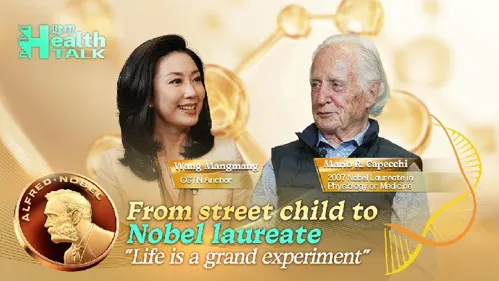
Mario Capecchi's journey from a street child to a Nobel laureate serves as a remarkable testament to resilience and inspiration within the realm of science. His life began under extraordinarily difficult conditions, having been displaced at the tender age of four amidst the turmoil of World War II. The harsh realities he faced in his early years instilled in him the patience required for survival, as he learned that securing his next meal was the foremost priority. These survival instincts laid the foundational qualities essential for a scientist.
Years later, when Capecchi proposed his pioneering work in gene targeting to the National Institutes of Health, the feedback was clear: what he sought to achieve was deemed impossible. However, while others interpreted this as a definitive barrier, Capecchi viewed it as an opportunity for inquiry, which set the stage for a high-stakes venture that risked his entire professional future on a vision that only he could see.
His aunt's words, 'The difficult you do right away; the impossible takes a little longer,' would echo through Capecchi's career. By successfully pioneering gene-targeting technology and creating the first 'knockout mice,' he established a crucial methodological basis for modern genetics and the exploration of human disease. This groundbreaking work earned him the Nobel Prize in Physiology or Medicine in 2007.
Yet, Capecchi’s narrative extends beyond his scientific achievements. He perceives research as an intricate form of puzzle-solving, believing that questions are often more significant than the answers we uncover. He describes experimental setbacks not as failures but as 'simply steps,' a perspective refined by his childhood experiences of breaking adversity into manageable parts.
At the age of 88, Capecchi exemplifies vitality, embracing a life filled with physical activity and intellectual engagement. His recent visit to China emphasized the importance of nurturing curiosity, urging young researchers and graduate students to relentlessly ask 'Why?' He believes this questing spirit is the vital force propelling science and society forward.
Capecchi's odyssey, from the streets to the forefront of global science, is a powerful demonstration that resilience can triumph over suffering, and that unwavering curiosity can dispel notions of the impossible. His story transcends mere motivation; it is a deep exploration of human potential and the capability to influence the future.
In an exclusive interview featured in CGTN Health Talk, viewers will hear Capecchi elaborate on his journey, revealing how the wisdom gained from his early survival transformed into a force that continues to impact the scientific community.
As a notable figure in modern biology, Mario Capecchi's revolutionary contributions to gene targeting are marked not only by their scientific significance but also by the resilience and philosophical outlook that accompany them. His early life in war-torn Italy forged a tenacity that enabled him to confront the challenges of pursuing what was once dismissed as impossible.
This dialogue sheds light on more than Capecchi's numerous breakthroughs; it unveils a life philosophy that positions science as an engaging puzzle that demands perseverance. Approaching his ninth decade and still brimming with vitality, Capecchi's ongoing mission is to inspire the next generation to recognize curiosity as a central force behind scientific advancement.
For those interested in longevity, Capecchi's advice and experiences offer profound insights into maintaining a life of inquiry and resilience.
Read These Next
China opens first super AI hospital in Hainan for ailments
China launched its first 'super AI hospital' in Boao, Hainan, built on an 'Alliance MaaS Platform' for advanced healthcare.

Italy Accelerates Transition to Green Energy Solutions
Italy aims for a green energy transition amid global tensions, discussing HVAC efficiency at MCE in Milan, needing policies for investment.

Tech CEOs Blame AI for Mass Layoffs
This article explores the recent trend of tech CEOs attributing job cuts to advancements in artificial intelligence, examining the implications for the workforce and the broader industry.