

Quantum Cryptography: The Future of Secure Communication
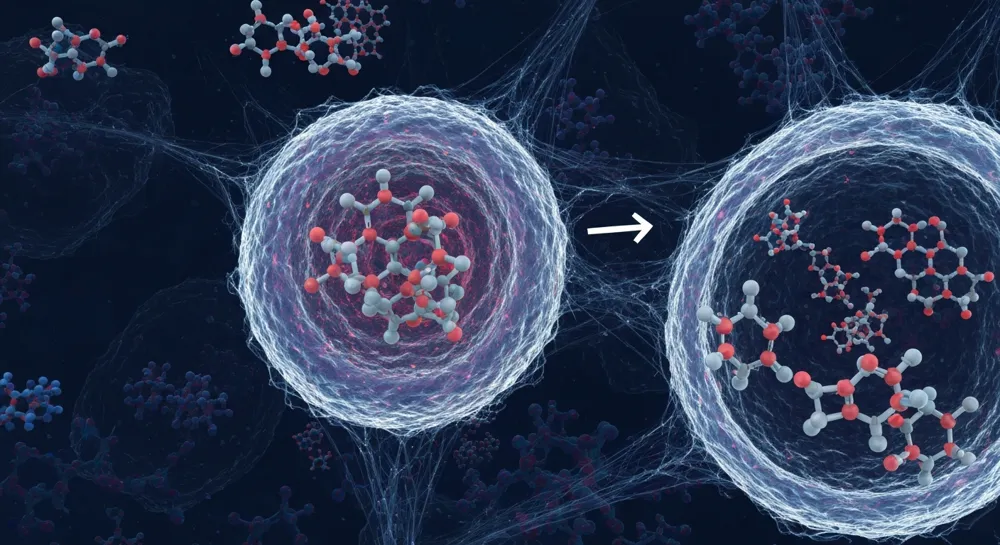
Quantum cryptography is revolutionizing the way we think about secure communication in our digital world. As our reliance on data-sharing continues to grow, the need for robust encryption methods becomes paramount. The recent Turing Award for Charles H. Bennett and Gilles Brassard highlights the critical importance of their groundbreaking work in this field. Their invention of quantum key distribution not only showcases the intersection of physics and computer science but also sets a foundation for future advancements in secure electronic communications.
At the heart of Bennett and Brassard's work, known as the BB84 protocol, is the principle of quantum mechanics that governs the behavior of particles, like electrons and photons. Traditional encryption methods often depend on complex mathematical algorithms, which can potentially be broken by powerful quantum computers. In contrast, BB84 leverages quantum properties to create a secret key for communication that is unbreakable by eavesdroppers. The key insight is that if an eavesdropper attempts to intercept the quantum bits (qubits) used in the transmission, the act of measuring those bits alters their state. Consequently, anyone trying to replicate or duplicate the key would inevitably reveal their presence, alerting the communicating parties to a security breach.
The real-world implications of quantum cryptography are profound. For instance, it can secure sensitive transactions in banking or protect private communications over the internet, making it a crucial component in safeguarding personal and corporate data. Moreover, the Turing Award serves as a validation of the importance of these techniques as we navigate a future increasingly dominated by quantum computing capabilities. As industries begin to adopt quantum cryptography, it stimulates a broader conversation: Is our current understanding of cybersecurity enough to anticipate the future challenges posed by quantum advancements?
Read These Next

China's Space Program Achieves New Milestones
China's space program is advancing rapidly, focusing on satellites, lunar and Mars missions, inspiring future engineers.

Scientists unveil first volcano genealogy under Antarctic ice
Research team creates first identity archive for 207 Antarctic subglacial volcanoes, advancing polar science and data availability.

China's 33 Million Stipend Babies from Billion-Yuan Family Aid
China launches a childcare subsidy system for 33M families, offering 3,600 yuan per child to boost the birth rate.