

Scientists unveil first volcano genealogy under Antarctic ice
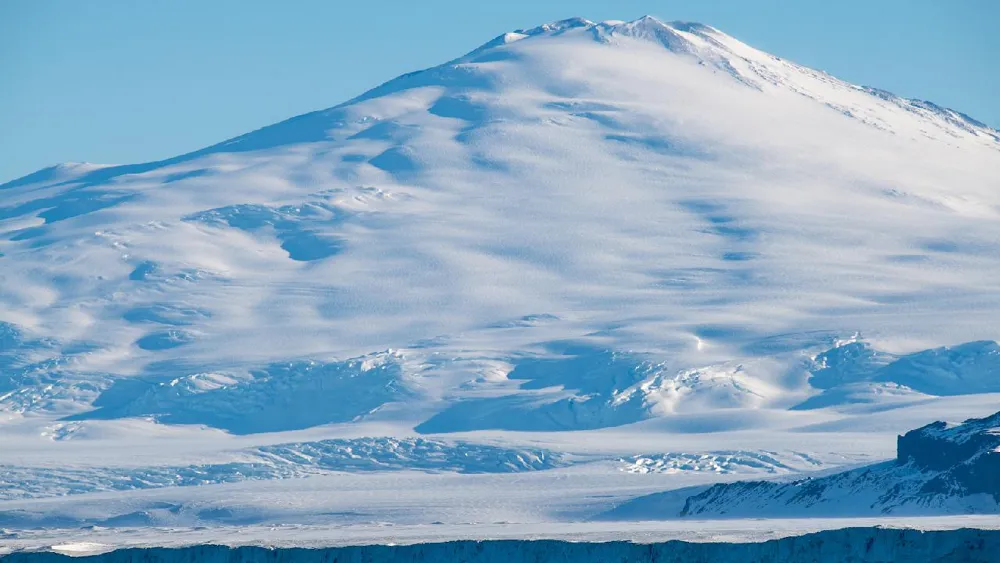
An international research team has achieved a significant milestone in polar research by creating the first comprehensive identity archive for 207 known subglacial volcanoes in Antarctica. This initiative represents a major advancement in the field and presents an essential public data resource for the global scientific community.
The landmark study is spearheaded by the Polar Research Institute of China (PRIC), collaborating with Zhejiang University and Fudan University, both situated in eastern China, along with researchers from the University of Exeter in the United Kingdom.
Through this collaborative effort, the team has compiled existing scientific data to develop the first pan-Antarctic subglacial volcano reference catalogue, designated as ANT-SGV-25. This catalogue addresses a significant research gap in understanding the continent-scale morphology and distribution of these concealed geological features, explained Cui Xiangbin, the project's lead researcher from PRIC's Center for Polar Ice and Snow and Climate Change Research.
The Antarctic ice sheet typically measures about 2,160 meters in thickness, with its most substantial point located in Wilkes Land in East Antarctica, reaching an imposing 4,757 meters.
Emerging research has shown that the subglacial volcanoes concealed beneath the massive ice sheet can modify subglacial topography, encourage basal ice melting, regulate hydrological activity beneath the ice, and ultimately influence ice flow dynamics and the stability of the ice sheet, remarked Cui.
Historically, the challenges associated with observation and data resolution have limited a systematic and unified comprehension of these subglacial volcanoes.
The newly developed archive supplies a comprehensive, multi-dimensional parameter system for these volcanoes.
By merging data and employing computer vision technology, the team has successfully extracted morphological features with precision while instituting a quantitative index system that covers aspects such as size, shape, and slope. This foundational work facilitates volcano classification, origin analysis, and impact assessments.
The researchers noted a disparity in the distribution of these volcanoes: most are clustered within the West Antarctic Rift System, while only a few, a mere three, have been identified in East Antarctica. This distribution pattern correlates with crustal stretching and elevated geothermal heat flow in the rift system.
The analysis further divulges that these volcanoes vary considerably in size, with heights ranging from 100 to 4,181 meters, volumes spanning from 1 to 2,800 cubic kilometers, and basal widths from 0.3 to 58 kilometers. The median average slope is approximately 8.1 degrees.
These groundbreaking research findings have been published in the esteemed international journal Earth-Science Reviews.
Read These Next

China's 33 Million Stipend Babies from Billion-Yuan Family Aid
China launches a childcare subsidy system for 33M families, offering 3,600 yuan per child to boost the birth rate.

Quantum Pioneers Create Unbreakable Digital Security Encryption
This article highlights the significance of the Turing Award-winning work of Charles H. Bennett and Gilles Brassard in the realm of quantum cryptography, detailing its principles, real-world applications, and future implications.

Alibaba Cloud Expands Client Base in Mexico Technology Sector
Alibaba Cloud showcases cloud computing and AI's potential to tech professionals in Mexico, highlighting collaboration with Chinese tech.