

Scientists find rare meteorite relics in Chang'e-6 moon samples
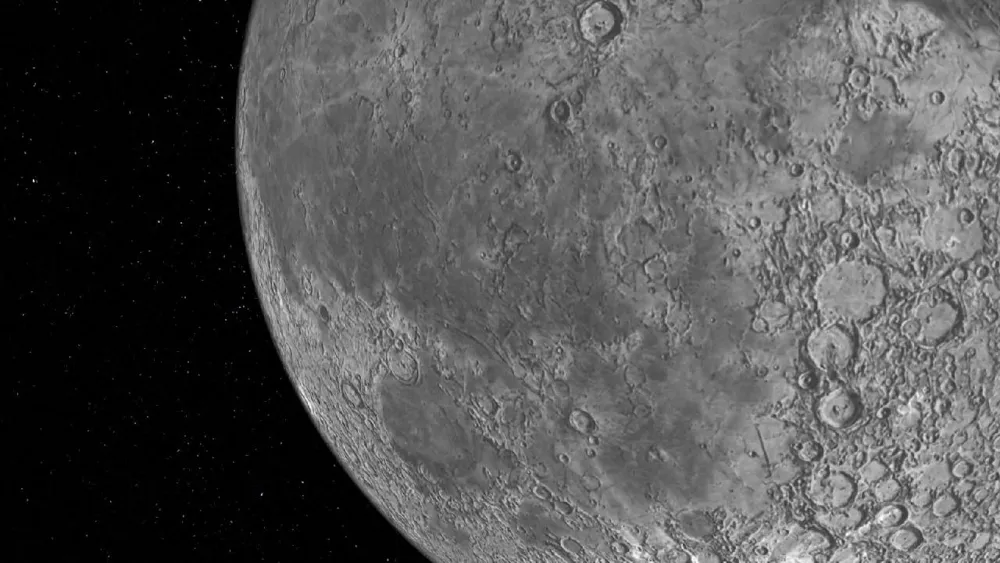
Scientists analyzing lunar samples from China's Chang'e-6 mission have made a significant discovery: they have identified rare meteorite remnants that could fundamentally reshape our understanding of mass transfer in the Solar System.
This groundbreaking study, published in the latest issue of the Proceedings of the National Academy of Sciences, was spearheaded by a research team at the Guangzhou Institute of Geochemistry (GIG), which operates under the Chinese Academy of Sciences.
Utilizing advanced techniques to examine the mineral composition and oxygen isotopes, the researchers meticulously scrutinized the lunar soil and confirmed that the fragments belong to CI-like chondrites, a category of meteorite that is abundant in water and organic materials and typically originates from the outer reaches of the Solar System.
CI chondrites are exceedingly rare on Earth, comprising less than one percent of all documented meteorites. The Moon, in stark contrast to Earth, has nearly no atmosphere or plate tectonics, enabling it to preserve an unblemished record of ancient asteroid impacts—a veritable "natural archive".
The implications of this study suggest that the Earth-Moon system may have experienced a greater number of impacts from carbonaceous chondrites than previously estimated by scientists.
Among the prevailing scientific theories regarding the Moon's origin is the giant-impact hypothesis, which posits that the Moon was formed from debris ejected when a Mars-sized proto-planet named Theia collided with the early Earth about 4.5 billion years ago.
This recent discovery not only indicates that materials from the outer Solar System are capable of migrating to the inner Solar System, but it also carries substantial implications for understanding the origin of water on the Moon's surface, as noted by Lin Mang, a researcher at GIG.
Furthermore, this finding opens new avenues for future research concerning the distribution and evolution of lunar water resources.
In addition to these insights, the study systematically established methodologies for identifying meteoritic materials found in extraterrestrial samples.
In 2024, Chang'e-6 captured headlines by returning 1,935.3 grams of samples from the far side of the Moon, specifically from the South Pole-Aitken Basin, which is recognized as the largest, deepest, and oldest basin on the Moon.
(Cover: The Moon, October 6, 2025. /China National Space Administration)
Read These Next
China's Revised Nature Reserve Rules Enhance Human Nature Balance
New Nature Reserve Regulations, effective March 15, implement a two-zone system, balancing ecology with local livelihoods.

Kaley's Lawsuit Questions Instagram's Addictiveness
This article explores the implications of a landmark lawsuit against Meta concerning the potential addictive nature of social media and its impact on mental health for young users, using Kaley's experience as a focal point.

China's Major Science Facilities Enter New Development Phase
China's Two Sessions discuss advancing science and tech, focusing on major initiatives and upgrades for international collaboration.