

China Sees 52.6% Healthcare Service Improvement in Five Years
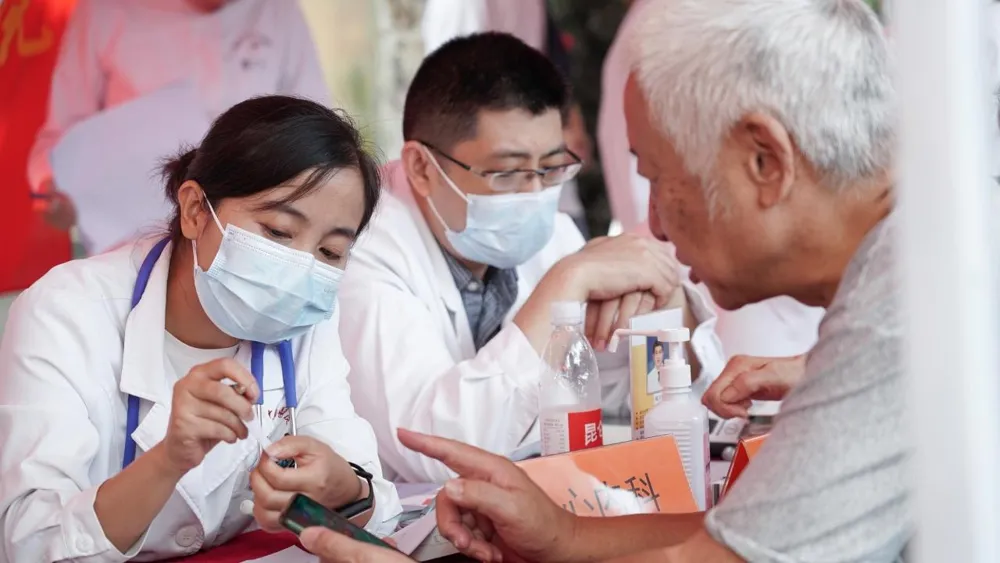
China's healthcare system has undergone significant improvements over the past five years, marked by a notable increase in the accessibility of services to the populace. At a recent press conference, Lei Haichao, the head of China's National Health Commission, announced that by 2025, primary health institutions are anticipated to account for 52.6% of total medical visits across the country. This shift underscores a strategic enhancement in patient access to essential health services.
Moreover, Lei highlighted that over 90% of families, both in urban and rural settings, will have access to medical care within a mere 15-minute travel time. This achievement reflects China's commitment to ensuring that healthcare is not only available but also conveniently located for its citizens.
Significant developments in the healthcare sector have also been made in terms of infrastructure. China has established 1.1 million medical institutions staffed by over 16 million health workers. The country has seen the number of practicing and assistant physicians rise to approximately 5.29 million and registered nurses exceed 6.03 million, enhancing the quality and quantity of care available.
In addition to the infrastructure improvements, China has introduced childcare subsidies, amounting to 3,600 yuan per year for each child under three, benefitting over 33 million families. This measure is a part of broader initiatives aimed at improving maternal and child health, with the potential for a total subsidy that could reach 10,800 yuan per child.
By 2025, the average life expectancy in China is projected to increase to 79.25 years, reflecting continuous health improvements and better standards of living. This figure indicates a steady yearly increase in life expectancy, which is a testament to the advances made in healthcare services.
Looking forward, the 15th Five-Year Plan (2026-2030) has been structured around the integration of health services to create a 'Healthy China' by 2035. This involves key projects aimed at bolstering healthcare infrastructure and enhancing rehabilitation capabilities throughout the nation.
To meet the healthcare needs of its 1.4 billion citizens, China plans to further develop its service capacities in several areas, particularly pediatrics, general practice, and mental health. The emphasis will also be placed on utilizing technology, including mobile health services and telemedicine, to improve service delivery and access.
Moreover, the reform of China's health system will be deepened, with plans to establish approximately 1,000 integrated medical and health consortia at the county level. This initiative is intended to improve the continuity and cohesion of care provided across different healthcare facilities.
Alongside these initiatives, China aims to enhance its public health security capabilities. This includes improving systems for infectious disease surveillance and rapid response, thereby better equipping the country to face public health emergencies.
Internationally, China has pledged to assist developing countries, particularly those involved in the Belt and Road Initiative, by providing healthcare support through technical assistance and sharing of knowledge. Initiatives to promote traditional Chinese medicine globally will also be part of this commitment towards fostering an inclusive global health environment.
Read These Next

Quantum Computing: Can Europe Win the Tech Race?
An exploration of quantum computing's principles, its potential impacts on various sectors, and Europe, particularly France's, chances to lead in this emerging technology.

Chinese Team Introduces Smart Firewall Electrolyte for Battery Safety
A Chinese research team developed a non-flammable electrolyte for sodium-ion batteries that prevents thermal runaway, enhancing safety.

Amazon Ends Support for Older Kindles, Users Outraged
Amazon's decision to stop supporting older Kindle models has left many users frustrated and concerned about e-waste implications.