

Space Tomatoes Ripen on Tiangong Ahead of Spring Festival
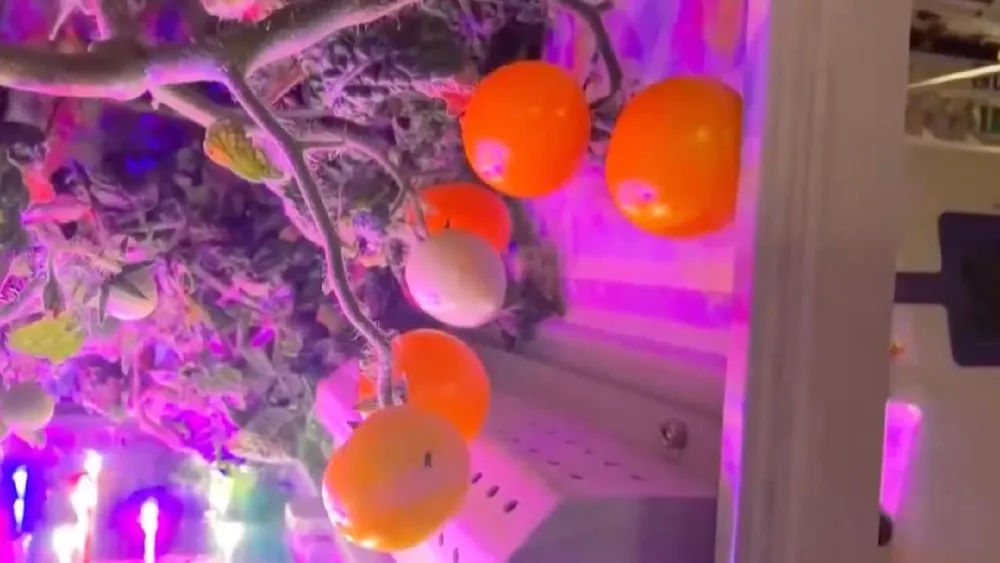
As China celebrates the 2026 Spring Festival, the crew of the Shenzhou-21 mission aboard the Tiangong space station has received a remarkable gift: a thriving harvest of tomatoes grown in orbit.
In a video reported by China Media Group on Wednesday, astronaut Zhang Hongzhang provided his fellow humans on Earth with a tour of what he refers to as a healing corner of the Tiangong, showcasing tomato plants that are thriving with vigorous growth.
The device nurturing these plants is known as an aeroponic cultivation system, which was developed by a research team from the China Astronaut Research and Training Center.
Zhang explained that it operates by vaporizing water into a fine mist, which can greatly enhance water-use efficiency.
Additionally, the system employs a specially designed LED light spectrum that significantly improves energy efficiency. The outcome is this flourishing display of space-grown tomatoes before us.
The aeroponic device was delivered to the space station by the Tianzhou-9 cargo spacecraft in July 2025. According to the report, its primary mission is to validate key technologies for the efficient cultivation of plants in microgravity.
The data gathered will inform future long-duration space missions in which bioregenerative life support systems may prove essential.
The sight and scent of the ripening tomatoes are a delight for all the astronauts on board.
Look at these tomatoes. They are so enticing, with a faint, fresh scent. Every time I pass by this area, I want to take a deep breath and enjoy the fragrance, said astronaut Wu Fei.
Currently, we tend to them daily and record their growth data. This valuable data on plant growth in orbit will serve as an excellent reference for cultivating crops in space in the future, Wu said.
Future plans for the Tiangong space garden involve aeroponic cultivation trials for wheat, carrots, and various medicinal plant species, with the aim of progressively expanding the range of crops that can be sustained in orbital environments.
For the astronauts, tending to this small garden offers a significant psychological boost amidst their busy schedules.
Read These Next

Chinese Drug Exhibits Potential Against Nipah Virus in Study
Chinese research shows antiviral VV116 is effective against Nipah virus, improving survival rates in tests and trials.

Drone Strikes' Impact on Amazon Web Services Security
An exploration of the drone strikes on AWS facilities highlighting vulnerabilities in critical technology infrastructures amid military conflicts, the workings of cloud computing, and implications for businesses worldwide.

Ethics of AI in Military Applications
OpenAI has decided to amend its agreement with the U.S. government regarding the use of its AI technology in military operations after public backlash raised ethical concerns about surveillance and autonomy. CEO Sam Altman acknowledged that the deal had been hastily made and will be revised to ensure that the AI will not be used for domestic spying. This situation underscores the profound implications of AI deployment in warfare and the pressing need for ethical oversight in its application.