

China's Healthcare Transitioning to Affordable Integrated Services
China's healthcare sector is experiencing a remarkable transformation, moving toward more affordable integrated services while also expanding the roles of pharmacies and embracing technological innovations to enhance patient care.
In recent years, significant strides have been made to develop a well-structured healthcare framework that maintains low costs while ensuring high-quality service. According to the National Health Commission, China has established the largest healthcare system worldwide, allowing over 90 percent of households to reach their nearest medical facility within 15 minutes.
While basic medical insurance coverage has stabilized at around 95 percent, improvements are ongoing. The National Healthcare Security Administration is working tirelessly to elevate the quality of this coverage through innovative digital solutions and reforms in procurement practices.
One of the most impactful changes has been the significant decrease in costs for high-value medical supplies and medications, initiated by the centralized volume-based procurement (VBP) program launched in 2018. This program has seen multiple rounds of state-organized drug procurement that have made essential medicines more accessible.
To date, nine rounds of procurement have been completed, encompassing 374 types of medications such as those needed for treating infections and chronic diseases. As a result, many of these favorable prices are now available for patients nationwide.
The effects on out-of-pocket expenses are profound; for instance, the price of coronary stents has dramatically dropped by over 90 percent, from approximately 13,000 yuan to just 800 yuan. The recent successful conclusion of the national VBP for high-value consumables is expected to provide patients with even more cost-effective options.
Additionally, a policy enacted earlier this year aims to make pharmacies more functional and economical for patients. This initiative permits retail chains to create internal service platforms where licensed pharmacists can perform remote prescription reviews and offer medication counseling.
Through this policy, designated pharmacies can now extend the same insurance benefits as local clinics, ensuring patients benefit from identical deductibles and reimbursements without incurring extra costs.
In an effort to bridge the disparity in medical resources between urban and rural communities, China is fostering the transfer of premium healthcare services to grassroots levels through inter-regional collaborations. An example of this is the partnership between Fudan University Shanghai Cancer Center and Lujiang County People's Hospital.
This collaboration not only brings specialized care closer to patients but also focuses on building a sustainable local workforce by implementing training programs where local staff receive advanced education from medical experts.
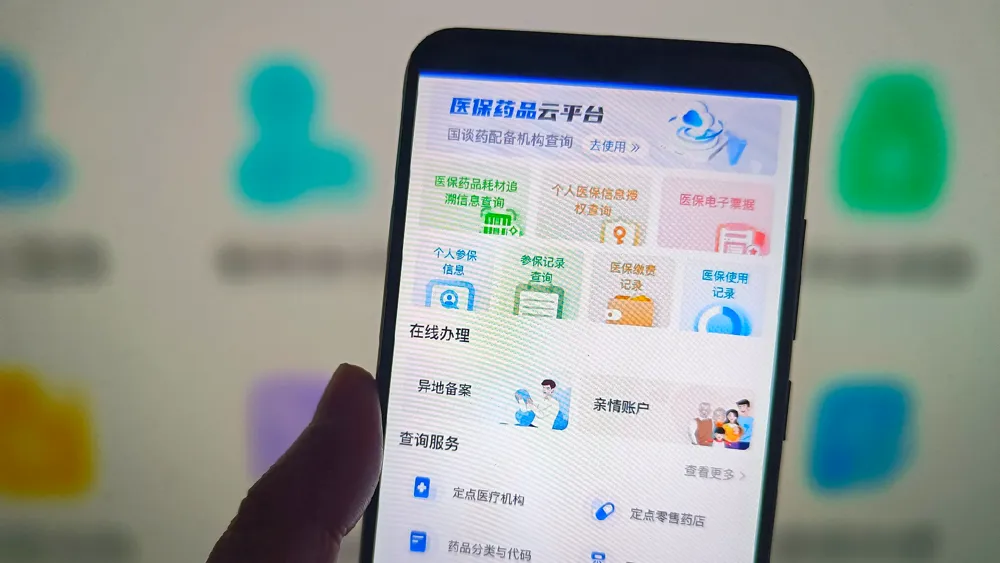
Moreover, advancements in technology are improving patient experience by fostering greater transparency regarding medication options and pricing. An example is the new mini-program that allows users to compare insured medications from pharmacies locally, which has improved accessibility to timely healthcare information.
Overall, these developments are netting significant advancements in both clinical services and the integration of digital health solutions, all supported by robust financial investments aimed at fortifying the national health insurance fund and encouraging ongoing healthcare innovation.
Read These Next

Eye-Scanning Tech: Verifying Humanity in Digital Interactions
Exploring the introduction of eye-scanning technology by Tinder and Zoom for user verification and its implications in a digital world rife with AI impersonation.

Can a Digital Twin Create a 'Superworker'?
This article explores the potential of digital twins, like Richard Skellett's AI counterpart, to transform ordinary workers into 'superworkers' by enhancing their productivity and addressing key considerations around governance and ethical use.

Quantum Computing: Can Europe Lead the Tech Race?
An overview of the potential for Europe, particularly France, to lead in the quantum computing race, highlighting key players and their innovative approaches.