

China Unveils Innovative Bone-Free Fish for Dinner Tables
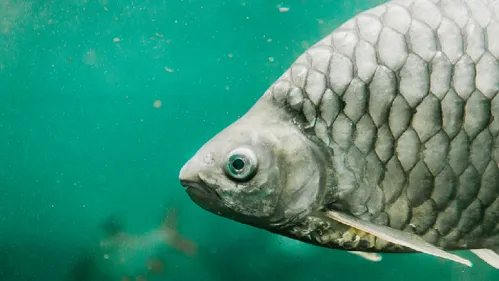
Chinese scientists have revolutionized the culinary landscape by introducing a bone-free Gibel carp named "Zhongke No. 6." This innovation promises to enhance both aquaculture sustainability and the overall enjoyment of seafood dishes.
For fish lovers, carp presents a classic culinary paradox: it is a prized dish due to its tender texture and nutritious profile, being rich in protein. However, it is notoriously difficult to eat because it contains more than 80 tiny, Y-shaped intermuscular bones.
The hassle of feasting on this freshwater fish is now a thing of the past, as the new variety developed is entirely free from those troublesome intermuscular bones. Additionally, it has been genetically engineered to grow faster, stronger, and in a more sustainable manner.
Helmed by Academician Gui Jianfang, a research team from the Chinese Academy of Sciences announced on Tuesday the successful gene-editing of the "Zhongke No. 6" breed, a strong candidate that aims to grace dinner tables.
To realize this feat, the scientists first outlined the Gibel carp's complex genetic map and pinpointed the runx2b gene, which directs the development of these intermuscular bones. Taking advantage of the carp’s multiple sets of chromosomes, the team applied CRISPR/Cas9 technology, likened to "molecular scissors," for precise editing.
By initiating a specific cut in the genetic sequence during the embryonic stage, the researchers effectively eliminated the instructions for bone growth. This strategic intervention ensures that while the fish's main skeleton develops properly, the biological pathway that would activate the growth of those problematic spines does not.
Initially developed in 2023, this intermuscular bone-free carp has since been validated through a study published in the journal Aquaculture, showcasing its culinary and agricultural implications.
The "Zhongke No. 6" has been optimized for three significant traits: high yield, enhanced disease resistance in crowded aquaculture settings, and reduced feed requirements for producing high-quality protein.
This remarkable achievement is emblematic of a painstaking and systematic endeavor lasting six years, a blossoming initiative under a strategic program by the Chinese Academy of Sciences termed "Precision Seed Design and Creation."
Read These Next

Live The Hype Real Stories of Receiving Healthcare Abroad
'The Hype' roundtable explores evolving global travel and healthcare, focusing on traveler comfort and care through shared experiences.
China's Green Factory Initiative Aims to Decarbonize Manufacturing
China leads in green manufacturing transformation, prioritizing low-carbon systems in its 14th Five-Year Plan to cut emissions.

Angola Aims to Raise 1.7 Billion in Global Markets Amid Debt Pressure
Angola aims to raise $1.7 billion by 2026 to address rising debt costs and sluggish growth, focusing on commercial financing and reforms.