

Chinese Scientists Create Smart Surveillance System for Mosquito Control
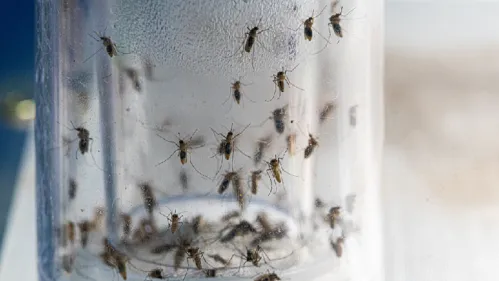
Chinese scientists have made significant strides in the fight against mosquito-borne diseases with the development of an intelligent surveillance system designed specifically for vector mosquitoes. This innovation is expected to play a crucial role in enhancing public health initiatives.
The project, spearheaded by Chen Xiaoguang, a professor at Southern Medical University, has already seen deployment across several communities in Guangdong Province in southern China.
Understanding the importance of accurate surveillance, the research team recognizes that diseases such as chikungunya are primarily transmitted through bites from Aedes mosquitoes, making effective monitoring essential.
Traditional mosquito monitoring methods have inherent limitations. As Chen Xiaoguang pointed out, standard mosquito traps and nets only capture non-blood-fed mosquitoes, while oviposition traps are designed for blood-fed, egg-laying mosquitoes.
The new intelligent system represents a significant advancement, utilizing coordinated dual-device operations for real-time, efficient monitoring of mosquito populations.
Automated monitoring units employ attractants that mimic human scents to effectively draw in non-blood-fed mosquitoes. Meanwhile, smart oviposition buckets utilize specially designed miniature water pools to monitor blood-fed Aedes albopictus, boasting efficiency levels four times greater than traditional oviposition traps.
Results from field tests have illustrated the system's remarkable effectiveness. In its initial week of operation, the technology was able to identify and alert authorities to abnormal surges in mosquito density across various zones, enabling targeted intervention protocols.
Chen emphasized the benefits of the new system, noting that manual trapping methods often resulted in delays. The introduction of real-time, cloud-based alerts has significantly improved the speed of responses for grassroots disinfection efforts.
Post-deployment surveillance has yielded impressive outcomes, showing almost a 40 percent decrease in adult mosquito captures in the monitored areas.
Currently, this state-of-the-art technology is operational in multiple locations throughout Foshan City in Guangdong, signaling a pivotal step forward in the efforts to combat mosquito-borne diseases.
In conclusion, Chen and his team remain committed to enhancing public health initiatives, striving toward accelerated prevention of mosquito-borne diseases through ongoing innovation in technology.
Read These Next

Risks of Trusting AI Chatbots for Medical Advice
This article explores the accuracy and reliability of AI chatbots in providing medical advice, highlighting findings from a University of Oxford study that indicate inconsistencies and the potential risks of relying on such technologies for healthcare.
TCM Achieves Major Inheritance and Innovation Breakthroughs in 2025
In 2025, China advanced Traditional Chinese Medicine with 90 new departments and 212 clinical projects, enhancing modernization efforts.

China's SOEs Sustain R&D Spending Over 1 Trillion Yuan for Four Years
In 2025, China's SOEs invested 1.1 trillion yuan in R&D, 41.8% of 2.5 trillion yuan for strategic industries, boosting growth.