

Biomineralization of Rare Earth Elements Found in Plants
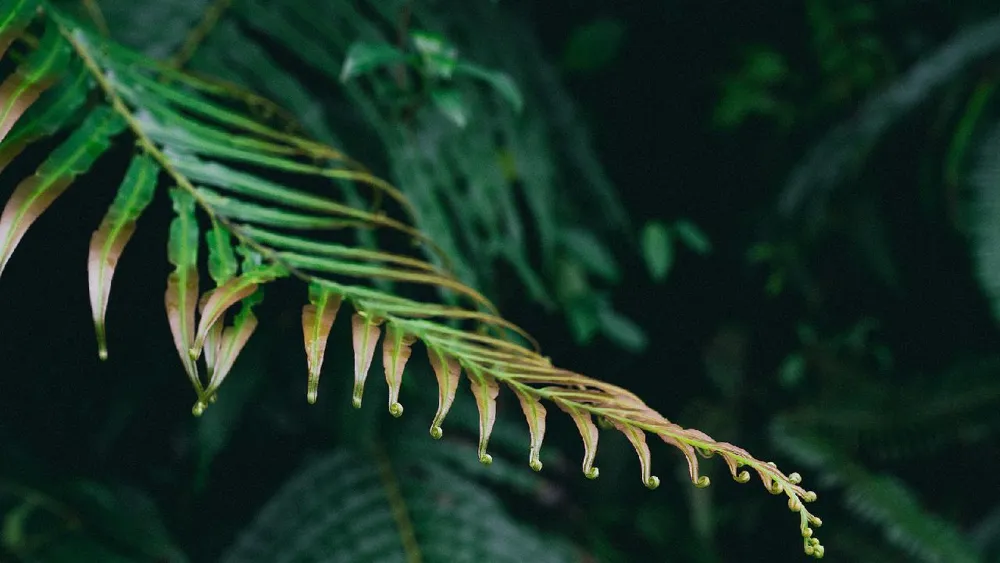
Researchers have made a significant breakthrough in the field of environmental science by discovering that the fern species Blechnum orientale can naturally accumulate non-radioactive rare earth elements. This finding offers promising implications for sustainable mining practices, as documented in a recent article published in the journal Environmental Science & Technology.
Rare earth elements are crucial for the development of clean energy technologies and various high-tech applications. However, the global supply of these essential metals faces increasing environmental and geopolitical challenges that hinder their extraction and utilization.
Traditionally, it has been recognized that microbes and animals possess the ability to produce minerals within their bodies; however, plant biomineralization has long been overlooked. This study sheds light on the remarkable capabilities of plants in this area.
The research team from the Guangzhou Institute of Geochemistry, a part of the Chinese Academy of Sciences, observed that rare earth elements absorbed from the soil precipitate as nanoparticles within the vascular bundles and epidermal tissues of Blechnum orientale. These nanoparticles then crystallize into monazite-(La), a valuable industrial rare earth mineral.
Monazite is typically formed through geological processes and is an important source of rare earth elements. However, the natural monazite often includes radioactive elements like uranium and thorium, complicating its extraction and use.
In contrast, the 'biological monazite' generated by Blechnum orientale under ambient conditions is free from radioactivity. This makes it a viable option for eco-friendly mining practices, allowing for the recovery of rare earth elements without the environmental risks associated with traditional methods.
This pivotal study not only enhances our understanding of how rare earth minerals can form within plants but also reaffirms the potential of phytomining as a sustainable method for resource extraction. It introduces an innovative, plant-based approach to the development of rare earth resources, paving the way for more environmentally responsible practices.
(Cover: Blechnum, or hard fern. /VCG)
Read These Next

Risks of Trusting AI Chatbots for Medical Advice
This article explores the accuracy and reliability of AI chatbots in providing medical advice, highlighting findings from a University of Oxford study that indicate inconsistencies and the potential risks of relying on such technologies for healthcare.
TCM Achieves Major Inheritance and Innovation Breakthroughs in 2025
In 2025, China advanced Traditional Chinese Medicine with 90 new departments and 212 clinical projects, enhancing modernization efforts.
China's SOEs Sustain R&D Spending Over 1 Trillion Yuan for Four Years
In 2025, China's SOEs invested 1.1 trillion yuan in R&D, 41.8% of 2.5 trillion yuan for strategic industries, boosting growth.