

China Debuts New Fengyun Meteorological Satellite
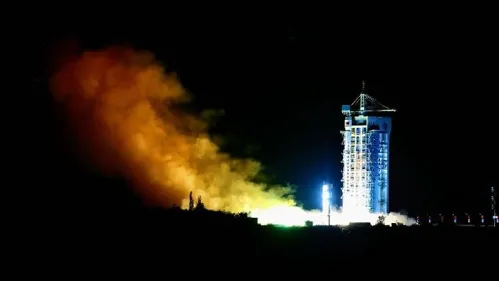
China has successfully launched the Fengyun-3 08 meteorological satellite, marking a significant advancement in the country's commitment to enhancing global weather prediction capabilities. The satellite was placed into orbit from the Jiuquan Satellite Launch Center on Saturday, further solidifying China's position in the field of meteorology.
A Long March-4C rocket, designed and developed by the Shanghai Academy of Spaceflight Technology, propelled the Fengyun-3 08 into its designated orbit at 3:28 a.m. This launch is part of China's broader green mission, illustrating the nation's dedication to environmental monitoring.
The Fengyun-3 08 satellite is equipped with nine advanced remote sensing instruments that add considerable muscle to its observational capabilities. Among the high-tech instruments onboard are a medium-resolution spectral imager, an infrared hyperspectral atmospheric detector, and a microwave imager, which together enhance atmospheric chemistry monitoring and climate change studies.
Operating in a sun-synchronous orbit, the Fengyun-3 08 is set to achieve high-precision global greenhouse gas detection over a swath of 100 kilometers, a feat that has not been previously accomplished by existing satellites.
Notably, this satellite will work alongside two other Fengyun satellites to create a comprehensive cluster aimed at achieving full global data coverage for weather observations. This synergy will notably reduce the update time for weather data needed for numerical weather forecasting from six hours to just four hours.
In addition to improving data refresh rates, the Fengyun-3 08 is expected to extend weather forecast periods by approximately 24 hours while enhancing disaster monitoring efficiency by nearly 100 percent. These improvements are set to significantly elevate the overall capability of weather prediction and forecasting.
The Long March-4C rocket, underscoring its versatility, can launch various types of satellites with different orbital requirements. It boasts a carrying capacity of up to three tons to sun-synchronous orbits at an altitude of 700 kilometers, and is designed to operate under various weather conditions.
The launch of the Fengyun-3 08 also marks the 596th flight mission for the Long March carrier rocket series, revealing the robustness and reliability of China's space launch capabilities. This continued success signifies China's growing prowess in satellite technology and its implications for global meteorology.
Read These Next
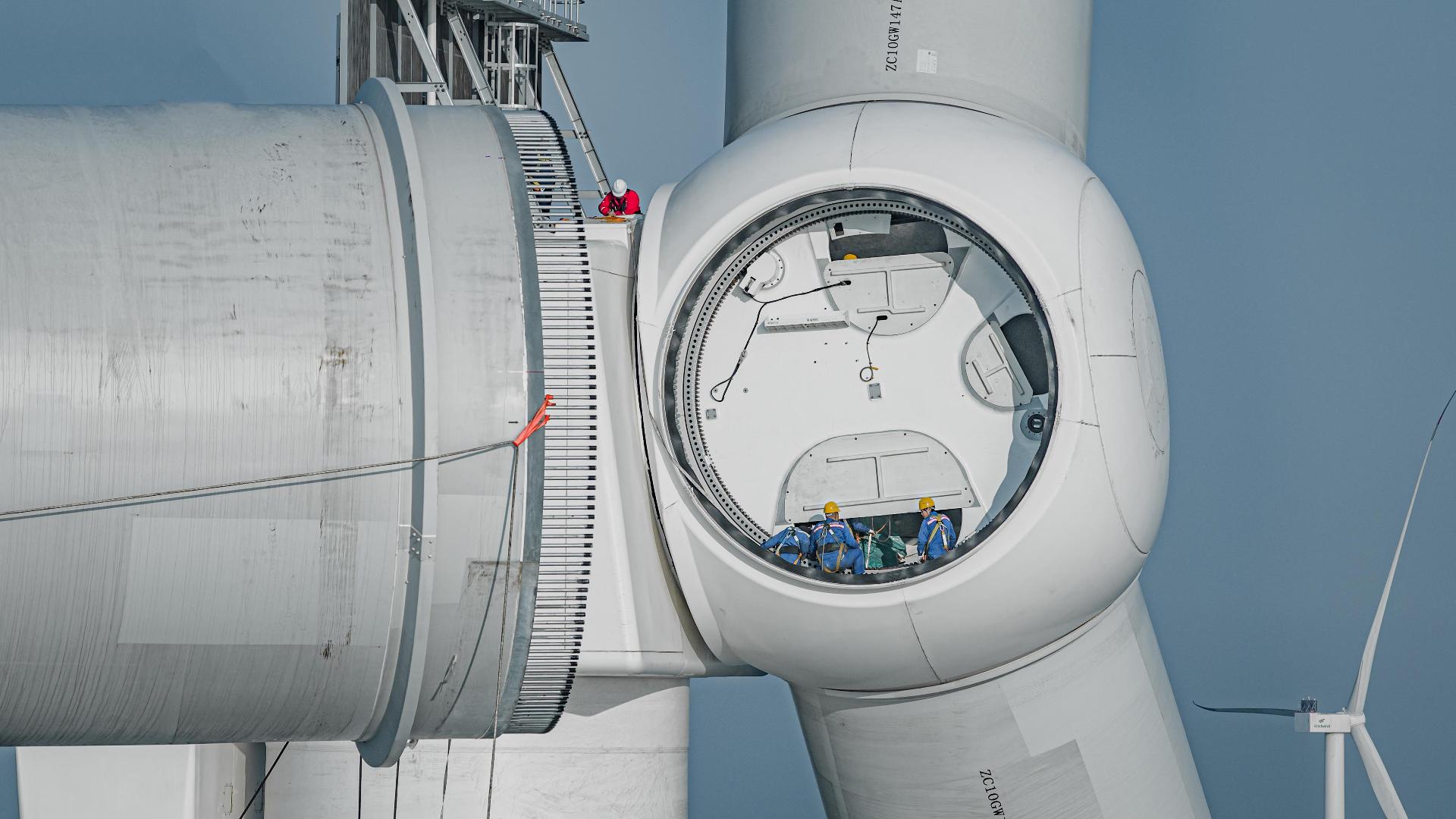
China installs world's first 20 megawatt offshore wind turbine
China has installed the world's first 20MW offshore wind turbine, powering 44,000 homes in Fujian, boosting clean energy efforts.

Musk's SpaceX and xAI: Partnering for Space AI Future
Exploring the merger between Musk’s SpaceX and xAI, its implications in the realms of AI and space technology, and what this fusion means for future innovations.

Industrial Upgrading Fuels Environmental Protection for Beautiful China
China's 15th Five-Year Plan promotes a 'Beautiful China' through green industrial transformation and sustainable practices.