

Unusual Exoplanets and Their Unique Orbits
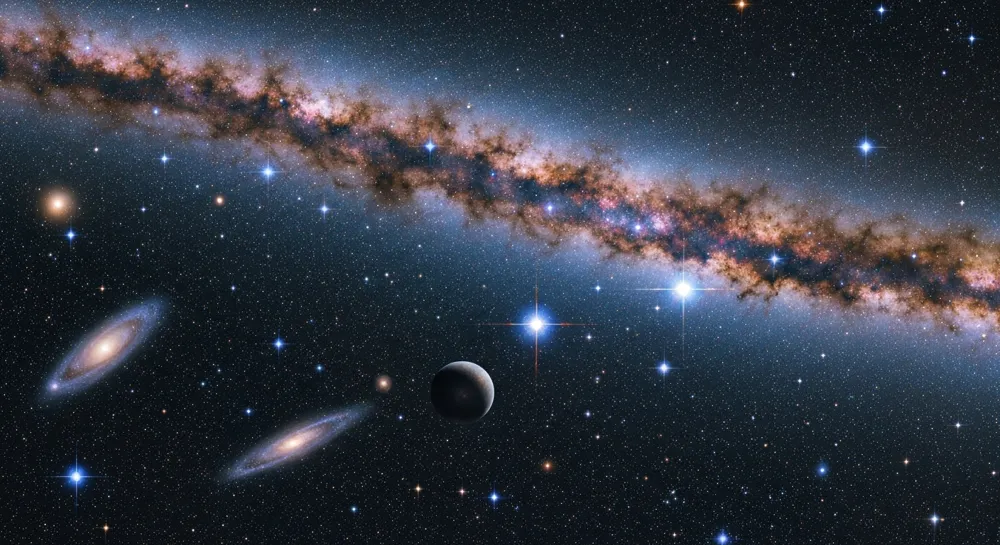
The discovery of ultra-short-period planets (USPs) not only broadens our understanding of planetary formation but also fuels our curiosity about the universe. As these rock-like worlds orbit their stars in less than 24 hours, they present a stark contrast to our own solar system and challenge traditional planetary evolution theories. This traceable divergence from expected patterns raises questions about the dynamics and history of planetary systems, which is especially relevant as humanity looks to explore and understand potentially habitable worlds.
Recently, research led by the Nanjing University team published in *Nature Astronomy* provides fresh insights into the origins of these extreme planets. Using data from the Guo Shoujing Telescope (LAMOST) alongside international observational data, they established a correlation between the age of host stars and the occurrence rate of USPs. This research indicates that older stars, residing in heavier regions of the Milky Way, tend to host USPs, suggesting these planets develop over billions of years rather than through rapid migration processes. This is pivotal, as it shifts the typical understanding of exoplanet evolution, reinforcing the need to study the long-term behavior of these celestial bodies.
These findings have important implications not just for exoplanetary science but for the broader narrative of cosmic history. As we build a more comprehensive catalog of exoplanets and their characteristics, the formation mechanisms contribute to our understanding of stellar evolution and galactic dynamics. In an era increasingly reliant on technological advancements for astronomical observation, the ability to visualize these systems, perhaps through sophisticated simulations or graphical representations, could further enhance public interest and engagement in space exploration.
Read These Next

Eye-Scanning Tech: Verifying Humanity in Digital Interactions
Exploring the introduction of eye-scanning technology by Tinder and Zoom for user verification and its implications in a digital world rife with AI impersonation.

Can a Digital Twin Create a 'Superworker'?
This article explores the potential of digital twins, like Richard Skellett's AI counterpart, to transform ordinary workers into 'superworkers' by enhancing their productivity and addressing key considerations around governance and ethical use.

Quantum Computing: Can Europe Lead the Tech Race?
An overview of the potential for Europe, particularly France, to lead in the quantum computing race, highlighting key players and their innovative approaches.