

Chinese Researchers Create Stretchable Electrodes for Brain-Computer Interfaces
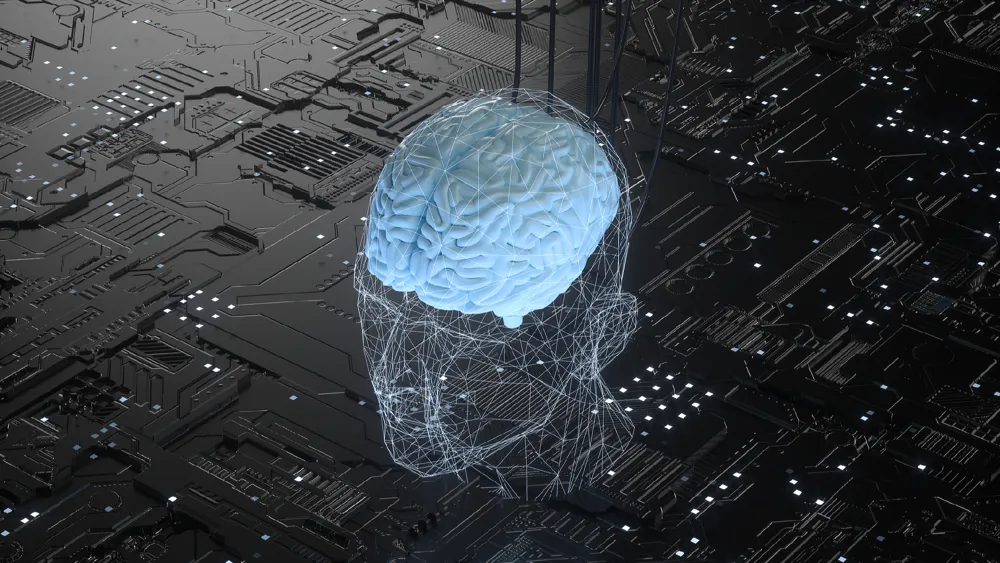
A groundbreaking development in the field of brain-computer interfaces (BCI) has emerged from a Chinese research team led by Fang Ying. They have successfully created a stretchable microelectrode that can record neural signals with high throughput while adapting to the biomechanics of the brain. This significant advancement addresses a crucial hurdle in BCI technology.
The findings were published on February 5 in Nature Electronics, a prominent journal in the realm of science and technology. The research was conducted by the Chinese Institute for Brain Research in Beijing, signifying robust national support for advancements in BCI development.
BCIs serve a vital function by establishing direct communication pathways between the brain and external devices, facilitating a deeper integration of human intelligence with artificial intelligence. However, a major challenge lies in ensuring long-term stable interactions within primate brains, which display greater pulsations and intracranial displacement compared to rodent models.
Traditional linear electrodes, often used in BCI technology, face difficulties due to their reliance on material elongation under strain, rendering them susceptible to dislodgment from neural tissue. In stark contrast, the innovative stretchable electrodes developed by Fang's team are designed to convert tensile stress into bending and twisting deformations, allowing them to dynamically adapt to the brain's movements.
To validate the reliability and stability of these electrodes post-implantation, the research team conducted systematic experiments in macaque monkeys. The results were promising, showing that the stretchable microelectrodes enabled long-term stable recordings within the primate brain.
In a noteworthy experiment, the implantation of a 256-channel array resulted in successful recording of 257 single-neuron signals, alongside high-precision decoding of motor intentions. This ability indicates that with consistent neuronal yield over time, the electrodes can capture more effective signals, enhancing potential clinical benefits.
The implications of this research are profound, as the ability to obtain and sustain high-quality neural signals is essential for the efficacy of invasive BCIs. This study lays a foundational technological framework for the eventual long-term application of BCIs in both primates and humans.
As countries around the world ramp up their BCI research efforts, the advancements made by Fang Ying's team may set a new standard for future innovations in the field, reinforcing the importance of stable and efficient neural signal recording technologies.
Read These Next

China's 33 Million Stipend Babies from Billion-Yuan Family Aid
China launches a childcare subsidy system for 33M families, offering 3,600 yuan per child to boost the birth rate.

Quantum Pioneers Win Turing Award for Secure Communication
This article discusses the significance of quantum cryptography, its foundational principles, and real-world applications, highlighting the contributions of Charles Bennett and Gilles Brassard, who recently received the Turing Award for their work.

Alibaba Cloud Expands Client Base in Mexico Technology Sector
Alibaba Cloud showcases cloud computing and AI's potential to tech professionals in Mexico, highlighting collaboration with Chinese tech.