

Hyundai's Boston Dynamics Launches AI Humanoid Robot at CES 2026
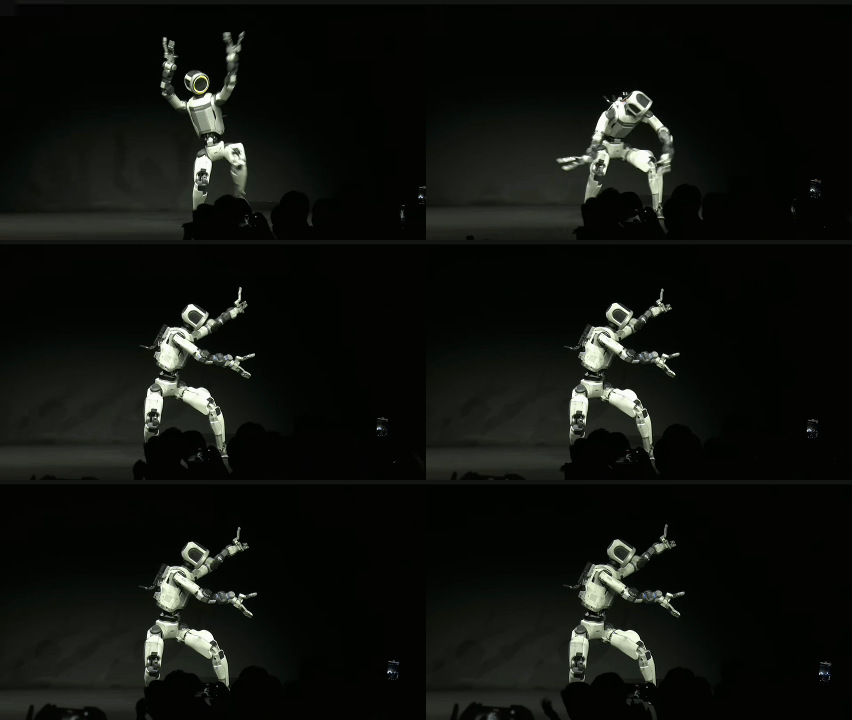
Boston Dynamics unveiled its next-generation Atlas humanoid robot at the Consumer Electronics Show (CES) in Las Vegas, marking a significant milestone in robotics and automation technology. The company aims to produce 30,000 annual units by 2028 as part of its push towards enhanced automation in manufacturing.
Zachary Jackowski, vice president and general manager of Atlas at Boston Dynamics, highlighted the pivotal role of AI advancements in this journey, stating, 'The rapid advancements in AI over the past few years are the piece that we needed, and that moment is finally here.' This sentiment underscores the transformative potential of artificial intelligence in robotics.
The manufacturing giant announced plans to establish a factory dedicated to producing the Atlas robots, although the specific cost of each unit remains undisclosed. The initiative aims to implement this technology across all Hyundai manufacturing sites, enhancing operations through what the company refers to as 'physical AI.'
Initially, the Atlas robots will be tasked with parts sequencing starting in 2028, with plans to expand applications as their safety and quality advantages are confirmed. This gradual introduction is intended to ensure reliable performance in real-world manufacturing scenarios.
Looking to the future, Hyundai anticipates that Atlas robots will transition into component assembly by 2030, with aspirations to handle heavy loads, repetitive tasks, and complex operations throughout its production facilities. This strategic integration is set to optimize factory workflows and improve efficiency.
The introduction of Atlas robots is designed to alleviate physical strain on human workers by taking on higher-risk and repetitive tasks. This could lay the groundwork for broader commercial utilization of humanoid robots in various industrial settings.
Furthermore, Boston Dynamics projects that humanoid robots will become the largest segment within the physical artificial intelligence market, which encompasses AI systems integrated into hardware for real-time data gathering and autonomous decision-making across critical sectors such as robotics, smart factories, and autonomous driving.
With these developments, Hyundai and Boston Dynamics are not only redefining automation in manufacturing but also setting a precedent for the integration of advanced robotics into everyday industrial practices.
In conclusion, the launch of Atlas at CES 2026 represents a significant step forward in robotics innovation, illustrating the boundless possibilities that artificial intelligence and automation can bring to industries around the globe.
This report includes insights from industry sources, ensuring readers grasp the broader implications of this technological advancement.
Read These Next

Eye-Scanning Tech: Verifying Humanity in Digital Interactions
Exploring the introduction of eye-scanning technology by Tinder and Zoom for user verification and its implications in a digital world rife with AI impersonation.

Can a Digital Twin Create a 'Superworker'?
This article explores the potential of digital twins, like Richard Skellett's AI counterpart, to transform ordinary workers into 'superworkers' by enhancing their productivity and addressing key considerations around governance and ethical use.

Quantum Computing: Can Europe Lead the Tech Race?
An overview of the potential for Europe, particularly France, to lead in the quantum computing race, highlighting key players and their innovative approaches.