

Chang'e-6 Reveals Secrets of Moon's Distant Far Side
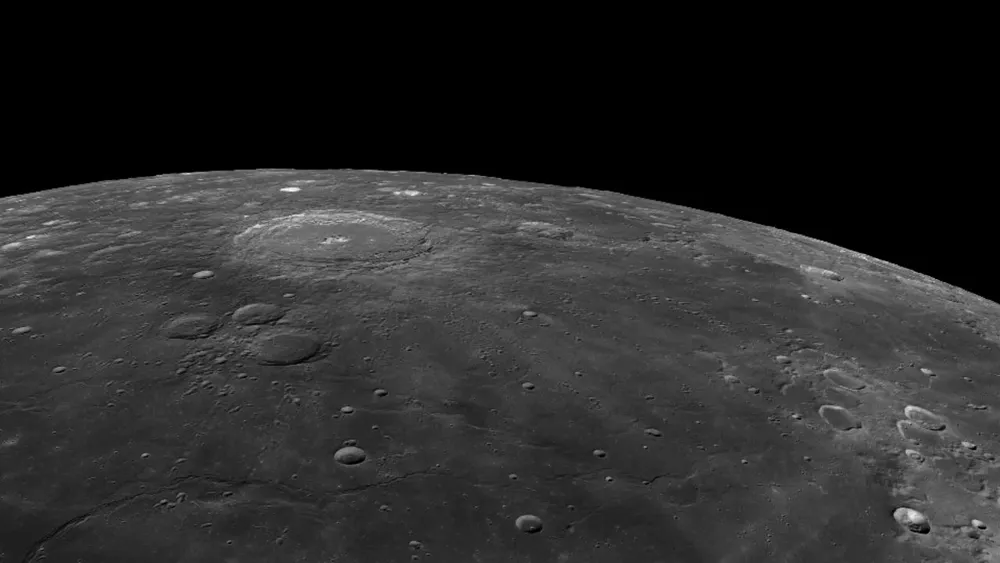
China's Chang'e-6 mission has provided new insights into the geological history of the Moon's far side, specifically revealing that the South Pole-Aitken Basin is approximately 4.25 billion years old. This discovery not only sheds light on the formation of this vast and ancient lunar region but also enhances our understanding of the Moon's overall geological processes.
The findings emerge from the groundbreaking study of the first-ever lunar samples retrieved from the far side, underlining the significance of the Chang'e-6 mission in the field of space exploration and scientific research. The mission's samples have drawn attention to the long-standing questions surrounding the unique composition and characteristics of the lunar farside.
Among the key discoveries is the confirmation of the Basin's ancient formation, which has long been a topic of fascination for planetary geologists. Understanding the age and the processes that led to the creation of the South Pole-Aitken Basin could alter existing notions about lunar evolution and volcanic activity.
Valuable insights also include intriguing evidence of past volcanic activity, suggesting that the Moon's geological history may be more complex than previously thought. The study of these samples provides a vital piece of the puzzle in unraveling the enigmatic history of the Moon, and how it compares to the Earth.
Furthermore, the Chang'e-6 mission emphasizes the continuous advancements in China's lunar exploration program. By methodically deploying a series of orbiters, landers, and now sample-return missions, China is positioning itself as a formidable player in international space efforts.
The utilization of advanced technologies and robotics, like the AI robot Taikobot, played a pivotal role in the Chang'e-6 mission, showcasing the integration of artificial intelligence in modern space exploration. This enables more efficient collection and analysis of lunar samples.
The implications of these discoveries extend beyond lunar studies; they offer a glimpse into the history of our solar system. By analyzing the chemical composition of lunar materials, scientists believe they can trace the origins of water and other volatile compounds that are fundamental to planetary development.
Plans for future missions to explore the lunar farside are already underway as NASA and other space agencies aim to build on the discoveries made by Chang'e-6. These upcoming explorations promise to enrich our understanding of the Moon and its formation.
In essence, the findings from the Chang'e-6 mission mark a significant milestone in lunar exploration and scientific research. As researchers continue to examine the samples, the ancient secrets of the Moon's distant far side will gradually come to light, advancing our knowledge of both the Moon and the Solar System.
Read These Next
China Launches Robotic Inspection Technology for Freight Trains
China has launched intelligent inspection robots for freight trains at Huanghua Port, inspecting 10 trains daily with 100% fault recognition.

China Announces New Green Targets for Data Centers
China launches action plan for green data centers, aiming to boost energy efficiency and renewable energy use by 2025.

Norway Launches World's First CO2 Storage Service
Norway is set to launch the world's first commercial CO2 storage service, the Northern Lights project, to reduce emissions.