

Turkey Lifts Tariffs on Chinese Electric Vehicle Imports
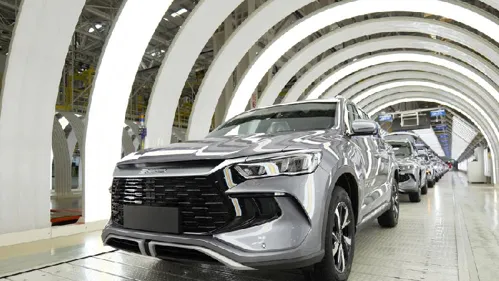
Turkey has made a significant policy shift by lifting tariffs on Chinese electric vehicle imports in a bid to attract manufacturers for local production and enhance the country's electric vehicle market.
The Turkish government has introduced a range of policy adjustments designed to draw investment into the electric vehicle sector, especially from Chinese manufacturers. This initiative arises in response to worries about increasing Chinese car imports, which have now captured a ten percent share of the market in Turkey.
According to The Daily Sabah, a presidential decree published in the Official Gazette on July 5 implemented a reduction in tariffs on imported Chinese vehicles. Under the new decree, the previously imposed 40 percent additional tariff has been decreased to a standard tariff of just 10 percent, significantly easing the financial burden on prospective investors.
This latest impetus is particularly beneficial for Chinese automakers, allowing them to capitalize on the Turkish market's strategic location near the European Union, where they are facing new tariff challenges. The proximity to the EU is expected to further entice investment from these manufacturers.
Prior to this regulatory easing, Turkey had imposed a steep 40 percent additional tariff on electric vehicles imported from China in March. This raised the total tariff on such vehicles to as high as 50 percent. Additionally, by June 8, the tariff policy had extended to all vehicles from China, including automotive parts, with a minimum duty of seven thousand dollars.
In response to Turkey's previous tariffs, China expressed strong dissatisfaction, asserting that these actions violate World Trade Organization rules. The Ministry of Commerce of China stated that unpredictable regulatory policies harm the interests of businesses on both sides, negatively impacting local Turkish consumers and eroding confidence among Chinese companies regarding potential investments.
Turkish industry insiders believe that the recent tariff adjustments are aimed at pressuring Chinese automotive manufacturers, particularly those specializing in electric vehicles, to invest in local production facilities. Concerns over the rising market share of Chinese imports have prompted the Turkish government to pursue strategies that would enhance domestic production capabilities.
Turkey has long sought to attract car manufacturers, focusing on persuading Chinese enterprises to establish operations within its borders. To facilitate this, the country maintains a customs union agreement with the EU, which has recently introduced provisional duties ranging up to 38 percent on Chinese electric vehicle imports.
As reported by Daily Sabah and corroborated by industry sources, the latest tariff exemption is designed to incentivize Chinese EV manufacturers specifically to invest in Turkey. Ongoing negotiations with Chinese firms poised to make investment commitments underscore the Turkish government's proactive approach to bolstering its automotive sector.
These commitments, once finalized, will unlock tariff exemptions for participating companies. However, companies that fail to meet the investment timelines outlined in Turkish regulations will face the loss of these benefits, ensuring that the incentive system remains effective and encouraging for foreign investors.
Read These Next

Eye-Scanning Tech: Verifying Humanity in Digital Interactions
Exploring the introduction of eye-scanning technology by Tinder and Zoom for user verification and its implications in a digital world rife with AI impersonation.

Can a Digital Twin Create a 'Superworker'?
This article explores the potential of digital twins, like Richard Skellett's AI counterpart, to transform ordinary workers into 'superworkers' by enhancing their productivity and addressing key considerations around governance and ethical use.

Quantum Computing: Can Europe Lead the Tech Race?
An overview of the potential for Europe, particularly France, to lead in the quantum computing race, highlighting key players and their innovative approaches.